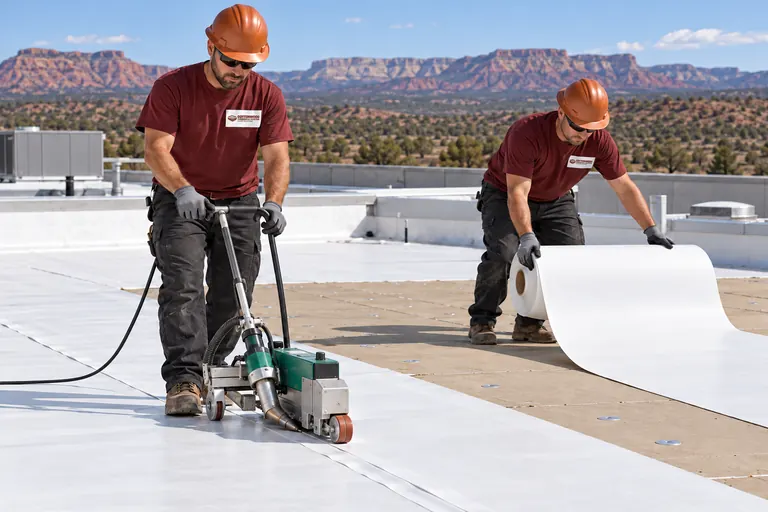
TPO Roofing Contractor
Welded thermoplastic sheets for flat roofs over offices, clinics, and retail suites.
- Best For: Flat roofs with a few rooftop units and cooled space below
- Look Elsewhere: Pitched roofs and decks crowded with pipes
Our commercial roofing services in Cottonwood cover four roof systems. Pick by roof slope, foot traffic on the deck, and any town color rules.
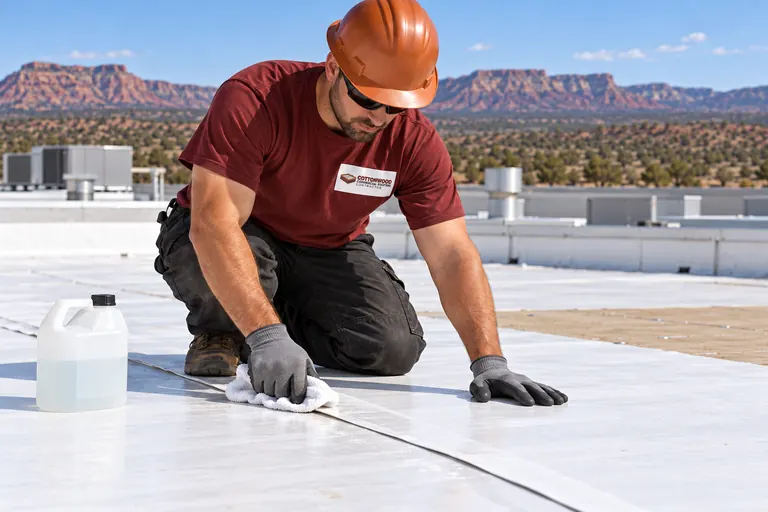 TPO Lap Prep
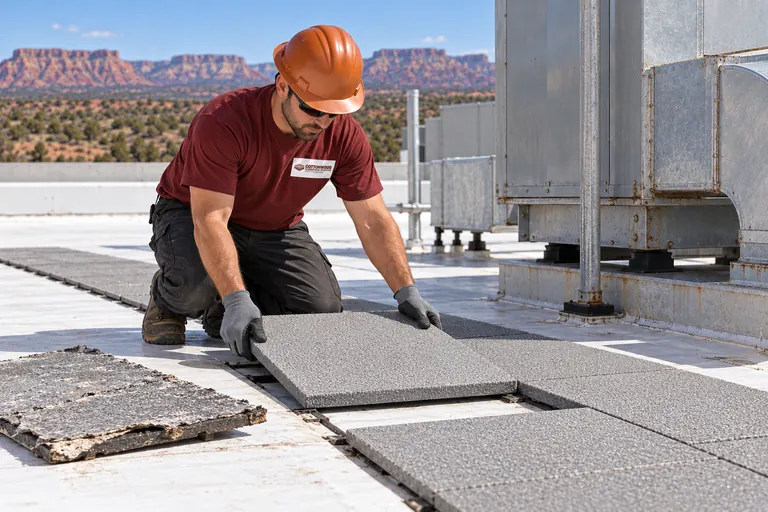 Walkway Pads
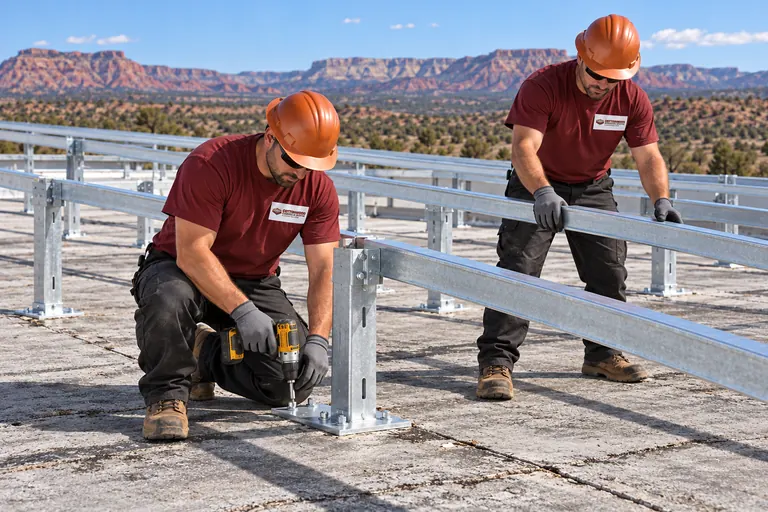 Metal Retrofit
Each system answers a different kind of roof. The best-for and look-elsewhere lines help sort yours before the inspection.
Welded thermoplastic sheets for flat roofs over offices, clinics, and retail suites.
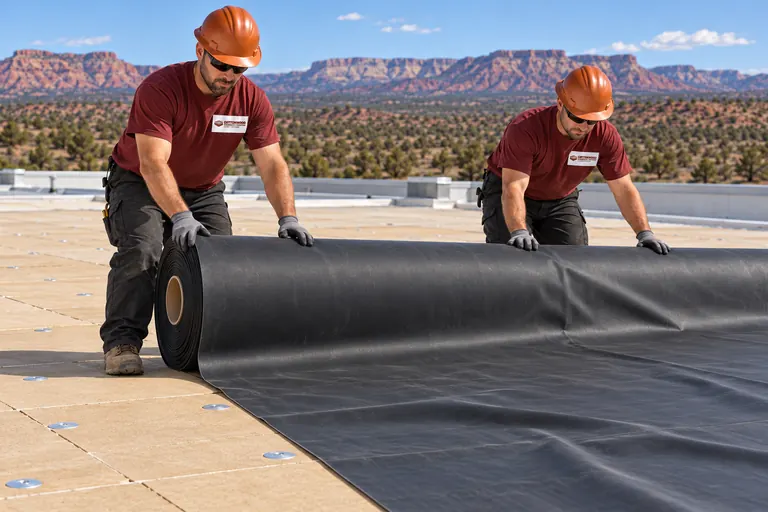
Rubber sheets that flex through freezing nights on wide, simple low-slope decks.
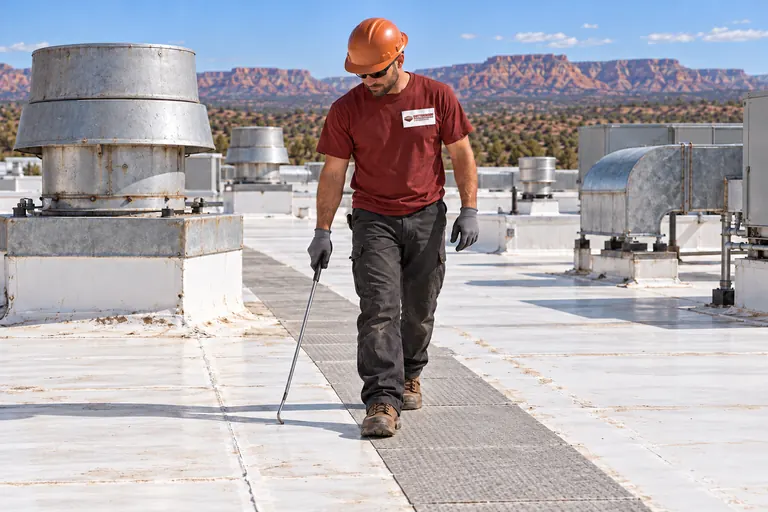
Big-footprint plant and warehouse roofs carrying fans, ducts, and maintenance traffic.
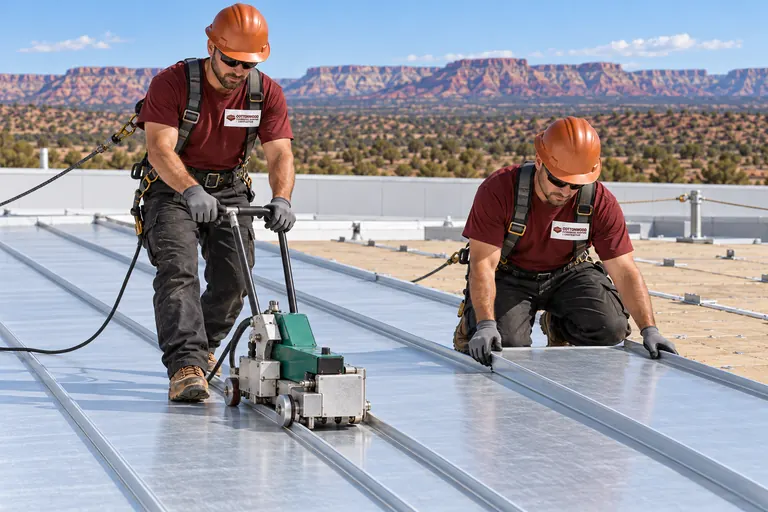
Standing-seam and screw-down panels on shops, steel buildings, and pitched roofs.
The same building can take more than one system. These four columns are where the choice usually gets made.
| System | Roof Slope | Foot Traffic | Sedona And Jerome |
|---|---|---|---|
| TPO | Flat to low slope, tapered insulation to drains | Fine with walkway pads at units | Tan or gray sheet under the reflectance cap |
| EPDM | Flat to low slope, few penetrations | Needs pads where crews walk often | Black or dark sheet fits the color rules |
| Industrial build-up | Wide low-slope spans with crickets | Heavy; marked walkways planned in | Muted membrane or painted panels |
| Metal panels | Pitched, or framed up over a flat roof | Light; walk the seams, not the pans | Painted or treated finish, no shiny metal |
Call with the unit location and when the drip shows up. Most of these trace back to curb flashing or a cracked pitch pan beside the unit.
Call UsThe order stays the same whichever system goes on. Only the seam method and the attachment change.
Moisture readings, slope checks, and a count of existing layers tell us which of the four systems the deck can carry.
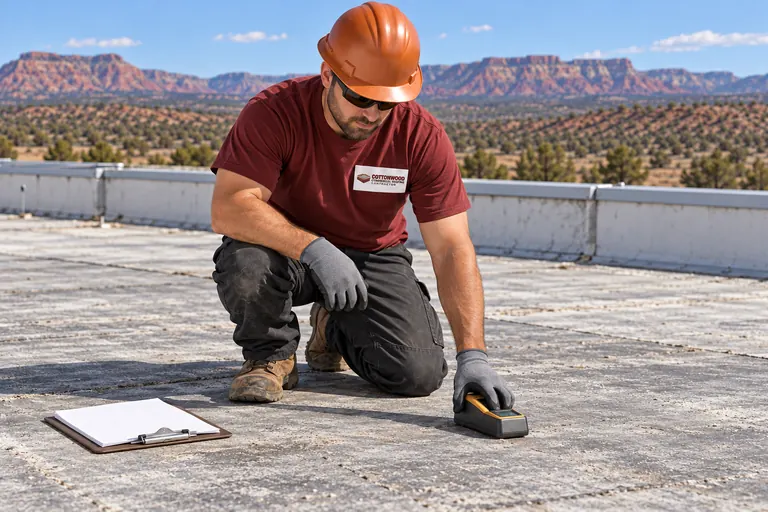
Steel decks take screws and plates, concrete takes adhesive, and a pitched steel building usually takes panels instead of a membrane.
Old roofing and wet boards come off one section at a time, and new tapered insulation is laid so water runs to the drains.
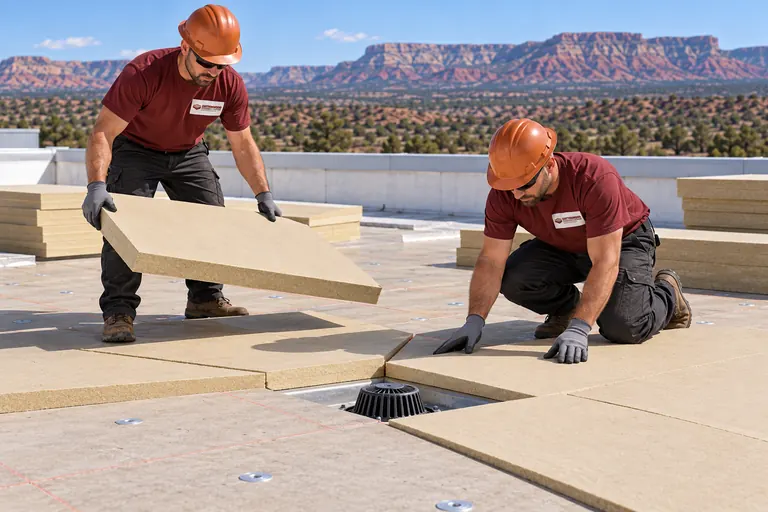
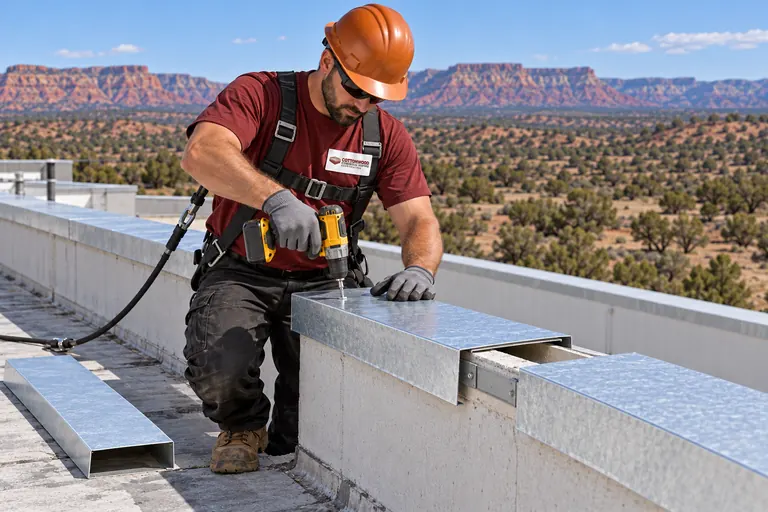
TPO laps get hot-air welded, EPDM laps get primed and taped, and metal panels get seamed, with curbs and edges flashed last.
Coping, edge metal, and gutters go back on tight, then the whole section gets walked for loose fasteners and open laps.
Short answers to the questions that come up when owners compare systems.
Slope, rooftop traffic, design rules, and how long you plan to hold the building decide it. Flat retail and office roofs lean TPO, big plain warehouse decks lean EPDM or TPO, plants pick by chemical exposure and equipment weight, steel shops lean metal, and Sedona or Jerome properties need muted membranes or painted panels.
Yes, at tear-off. A worn EPDM deck can take TPO, and a leaking flat roof can get framed up for metal panels after a structural check. Switching systems over the old roof is rarer and depends on dry insulation and a single existing layer.
Tear-off of wet insulation, the number of penetrations to flash, deck repairs, and edge metal drive most of the price. Membrane choice matters less than how much of the roof has to come off and how many curbs and pipes sit on it.
Over cooled space in Cottonwood, a white TPO surface reflects summer sun and eases the load on rooftop units. In Sedona the Land Development Code bans white and reflective roofs, so tan or gray sheets that stay under the reflectance cap take its place.
Usually only lifted or shut down, section by section. Curbs often get raised so the new flashing reaches the required height, and the HVAC shutdown is arranged with building staff ahead of time so the space below stays usable.
Look at the surface: white or tan sheets with welded laps are TPO, black rubber with taped seams is EPDM, and ribbed or seamed steel is metal. Gravel or a granular cap sheet points to an older built-up roof that we check at inspection.
Tell us the building type and roughly how big the roof is. The roof walk settles the system before any price is set.
Want A Call Back About Your Roof?
Leave a name and number and we will call to talk through the roof.
Or call now: (928) 436-4826