Cottonwood Commercial Roofing Contractor

As a commercial roofing contractor in Cottonwood, we repair, recover, and replace TPO, EPDM, industrial, and metal roofs across the Verde Valley. Every job starts on your roof.

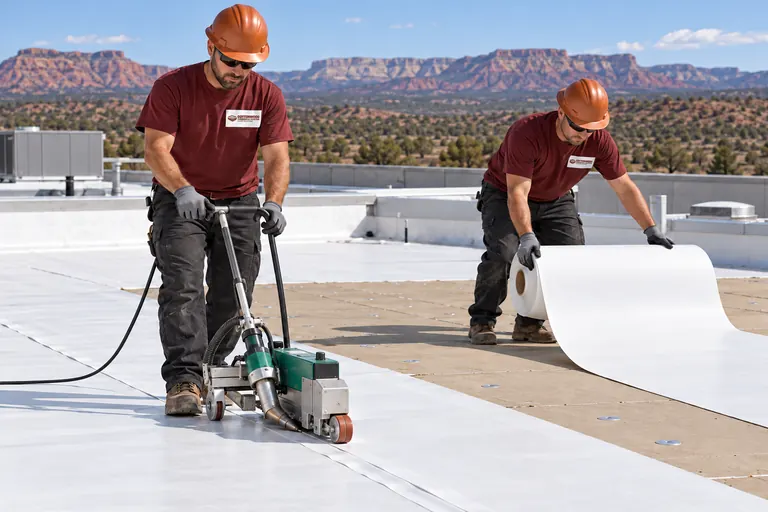
Roofer guiding a hot-air welder along a white TPO seam on a commercial roof in Cottonwood, AZTPO Seam Welding
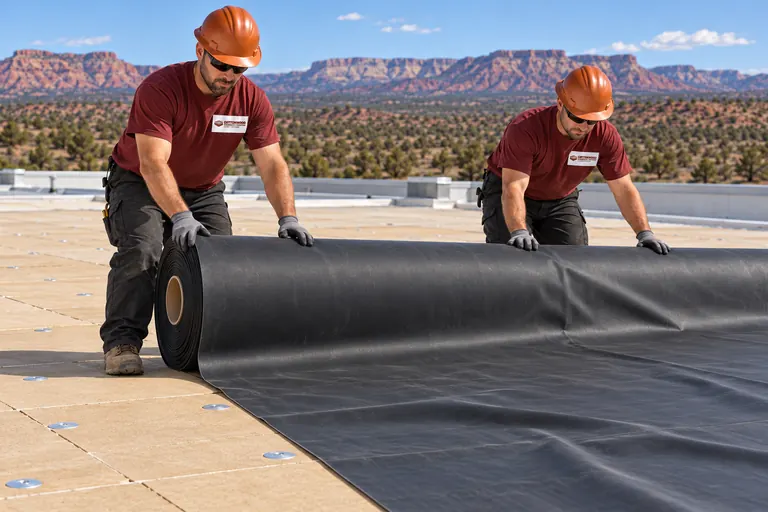
Two roofers unrolling a black EPDM sheet over cover board on a flat commercial roofEPDM Sheet Install
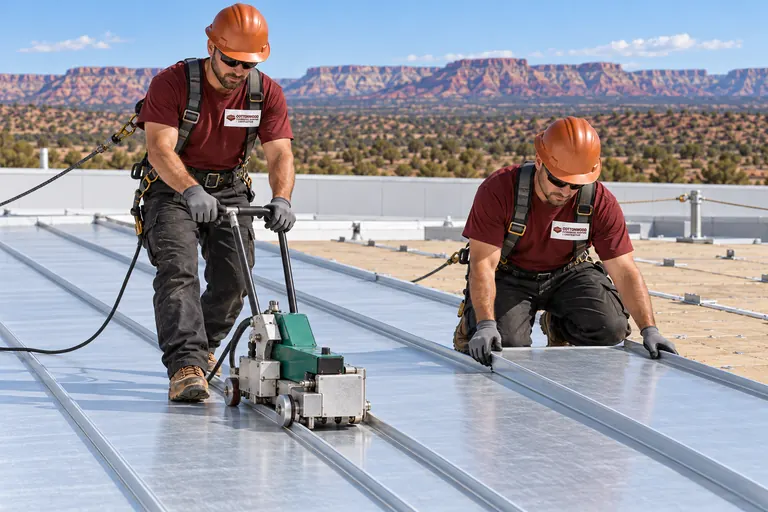
Roofers closing standing-seam metal panels with an electric seamerStanding Seam Metal
  • SystemsTPO, EPDM, industrial, and metal
  • First StepA walk of the whole roof
  • PermitsChecked by town or county
  • CoverageCottonwood plus eight nearby towns

Repair, Recover, Or Replace Your Commercial Roof

Most roofs land in one of three places. Find yours by the signs on the deck, then see which roof systems handle that work.

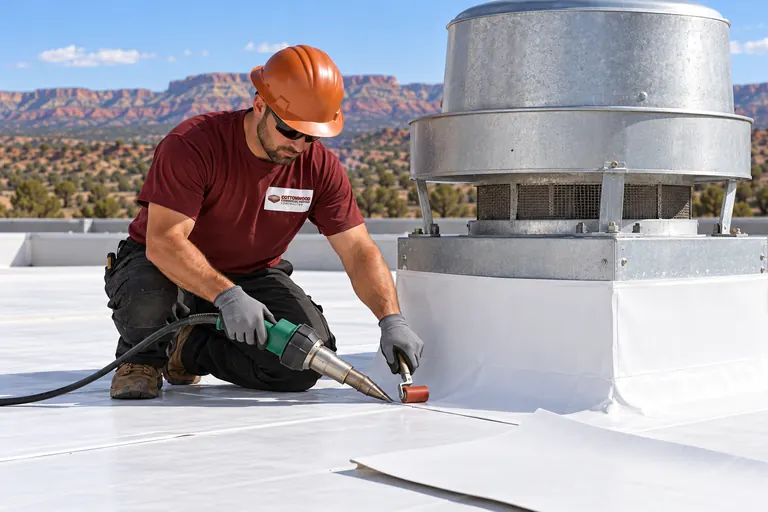
Roofer sealing membrane flashing around a large exhaust-fan curb

Repair

Damage stays in a few spots and the insulation underneath is dry. We fix the seam, curb, or fastener that failed and keep the rest of the roof in service.

Signs You Are Here

  • A few open laps or loose curb flashing
  • Punctures where crews walk to rooftop units
  • One ceiling stain that traces to a single spot
  • Backed-out screws on an otherwise solid metal roof

Systems For This Work
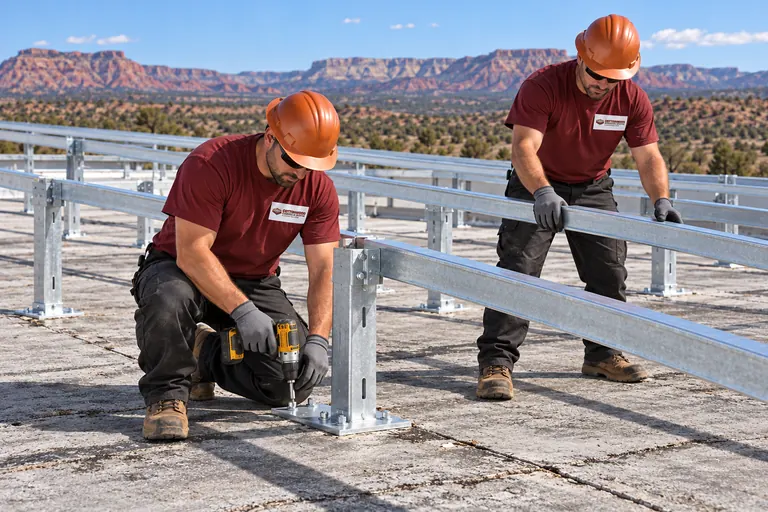
Two roofers fastening metal retrofit framing over an old flat roof

Recover

One existing layer, dry boards confirmed by moisture readings and a core cut, and a deck worth keeping. A new membrane, or framed metal panels, goes over the top.

Signs You Are Here

  • Worn, chalky membrane with dry insulation below
  • Only one roof layer on the deck
  • Ponding that tapered insulation can fix on top
  • A flat roof you want turned into sloped metal

Systems For This Work

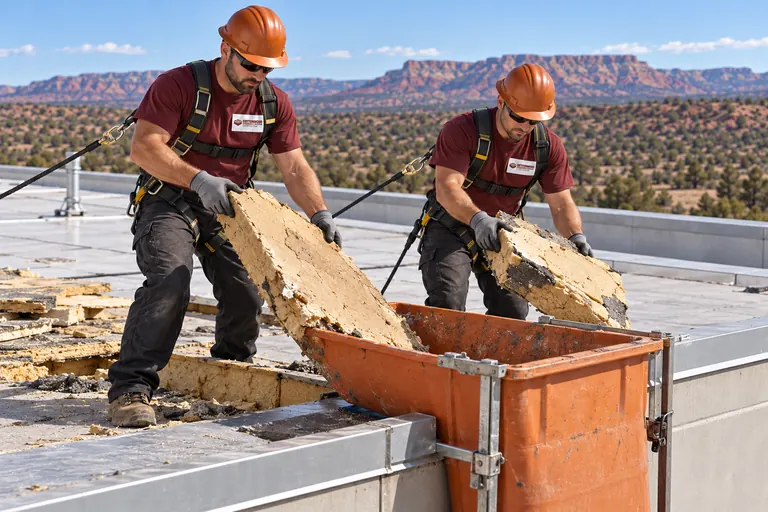
Two roofers loading torn-off wet insulation into a debris chute at the roof edge

Replace

Leaks keep coming back, wet insulation spreads across the deck, or two layers already sit on it. The old roof comes off one section at a time.

Signs You Are Here

  • Soft spots across large areas of the deck
  • Brittle, shrinking, or cracked membrane
  • Two or more existing roof layers
  • Rust holes through metal panels beyond the laps

Systems For This Work

Which Roof System Suits Your Building

Building type usually points to a system. Slope, rooftop traffic, and town color rules settle the final choice on the roof itself.

BuildingCommon FitWhy It WorksWatch For
Retail strip or office with a flat roofTPOWelded laps; white where allowed, tan or gray where reflectance is cappedA rooftop unit over every suite
Large low-slope warehouseEPDM or TPOWide sheets mean fewer seams, and rubber stays pliable in cold snapsLong drain runs between scuppers
Manufacturing or processing plantTPO, EPDM, or metalPicked for chemical exposure and the weight of equipmentVibration and fumes at exhaust curbs
Steel building, shop, or pitched roofMetalSheds water fast and outlasts the membrane systemsBacked-out fasteners at panel laps
Property in Sedona or JeromeMuted membrane or painted metalMeets local color limits and design reviewColor samples approved before ordering

How A Roof Job Runs From First Visit To Final Walk

Every job follows the same order: we look first, write up what we found, and then work one section at a time.

  1. Inspect Your Roof

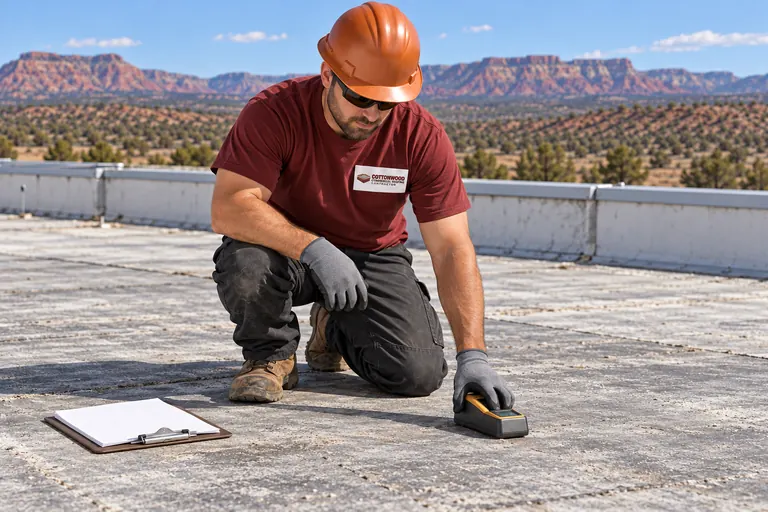
    We walk every section, press a moisture meter along suspect areas, and photograph open seams, ponding rings, and loose flashing before anyone talks price.

    Roofer pressing a moisture meter against a worn gray membrane during a roof inspection
  2. Sort Repair From Replacement

    Dry insulation and a few open laps point to repair. Wet insulation across large areas, or two roof layers already in place, point to tear-off.

  3. Set The Scope And Permit

    The scope is written by roof section, and we confirm whether the City of Cottonwood, a town, or Yavapai County issues the permit for your parcel.

  4. Prepare The Deck

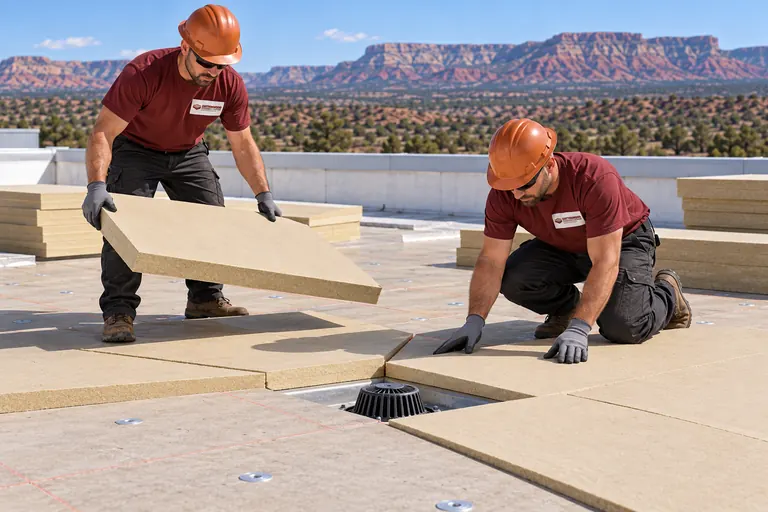
    Wet boards come out, tapered insulation goes in sloped toward the drains, and each section is closed up before the crew leaves.

    Roofers laying tapered insulation boards toward a roof drain with chalk lines on the deck
  5. Install And Walk The Roof

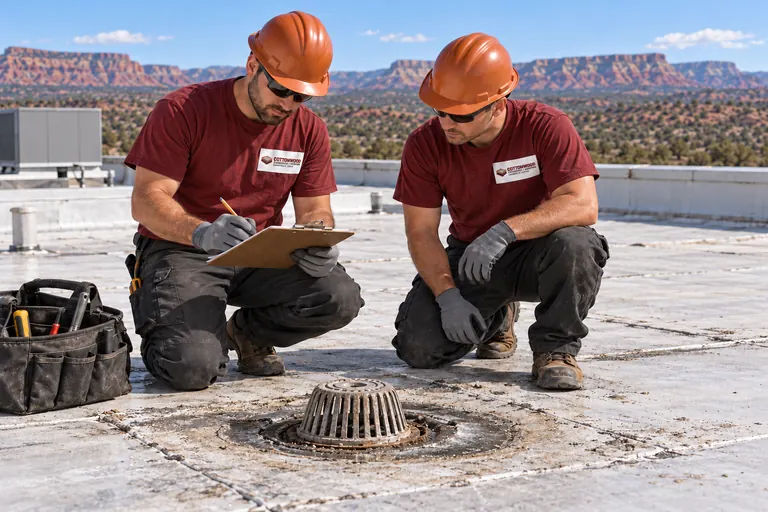
    Seams get welded or taped, curbs and edges get flashed, and the completed section is walked with you to check drains and details.

    Crew lead checking items off a clipboard beside a roof drain while a second roofer looks on

Ceiling Stain After A Monsoon Storm?

Call and tell us where the stain sits and which way the storm came from. That points us to the seam or flashing above it.

Call Us

Signs Your Commercial Roof Needs Work

Most roof trouble shows up inside first. Match what you see to the likely cause on the roof and what we do about it.

  • Ceiling stains after storms

    Likely Cause

    Open seams or loose flashing at a curb above the stain, letting wind-driven monsoon rain in.

    What We Do

    We trace the water path, then reweld or retape the seam and reflash the curb.

  • Water standing two days later

    Likely Cause

    Low spots from crushed insulation, or a drain choked with dust and juniper debris.

    What We Do

    We clear the drain, then add tapered insulation or a cricket so water moves off the roof.

  • Cracks that widen each winter

    Likely Cause

    Water trapped in cracks freezes overnight at roughly 3,300 feet and pries the opening wider.

    What We Do

    We cut out the damaged area, dry it, and patch with matching membrane before the next freeze.

  • Loose screws on a metal roof

    Likely Cause

    Daily expansion and contraction backs fasteners out and splits their rubber washers.

    What We Do

    We replace fasteners with oversized screws and new washers, then seal the panel laps.

  • Roof edge lifting after a storm

    Likely Cause

    Wind gets under loose edge metal or coping and peels the membrane back from the perimeter.

    What We Do

    We refasten or replace the edge metal and reattach the membrane along the roof edge.

  • Soft spots underfoot

    Likely Cause

    Wet insulation below the membrane, often fed by a small leak that ran for months.

    What We Do

    Moisture readings map the wet area, and only the soaked boards get replaced.

What Changes After The Work

Here is what a repaired or replaced roof looks like next to the roof you have now.

Before The Work

  • Buckets under the same ceiling tile every storm
  • Water sitting near drains for days after rain
  • Seams opening a little wider each winter
  • Rusty fastener heads and stained panel laps
  • Patches stacked on patches around HVAC curbs

After The Work

  • Welded or taped seams checked along their full length
  • Drains cleared and low spots built up with tapered insulation
  • Fresh flashing at curbs, pipes, and parapet walls
  • New fasteners and sealed laps on metal panels
  • A roof plan marking each repair for the next inspection

Where We Work Around Cottonwood

Pin shape on the map shows who issues the permit. We confirm the right office for your parcel before any work is scheduled.

Verde Valley service area map, not to scale: Cottonwood at the center, towns placed by direction, pin shape shows the permit authorityVerde RiverSR 89ASR 260SR 179I-17CottonwoodClarkdaleJeromeVerde VillageCornvilleSedonaOak CreekCamp VerdeRimrockWho issues the permitCityTownYavapai CountyNSchematic, not to scale

Cities

  • Cottonwood: City of Cottonwood Community Development issues building permits for roofs inside city limits.

  • Sedona: white and reflective roofs are banned here, so membranes and metal panels come in muted colors.

Towns

  • Clarkdale: flat roofs tucked behind parapet walls, and the town requires a permit for roofing work.

  • Camp Verde: moisture readings decide recover or tear-off, and commercial re-roofs need a town permit.

  • Jerome: the Design Review Board looks at roofing and paint changes before material is ordered.

Yavapai County Communities

  • Verde Village: shared retail roofs where a leak over one suite can start several units away.

  • Oak Creek: Village of Oak Creek roofs crowded with HVAC curbs, pipe boots, and pitch pans.

  • Cornville: simple low-slope buildings where ponded water freezes overnight in winter.

  • Rimrock: exposed roof edges and coping that take the brunt of monsoon gusts.

Questions Cottonwood Building Owners Ask

Straight answers to what owners ask before the first roof visit.

How does Verde Valley weather wear down a commercial roof?

Each season goes after a different part of the roof. Long summers at roughly 3,300 feet dry out sealant and older membranes, and monsoon storms, which the National Weather Service dates June 15 to September 30, push wind-driven rain into weak seams.

Winter nights below freezing widen cracks wherever water sits, and wide day-to-night swings work fasteners and flashing loose.

What happens during the first roof visit?

We walk the entire roof, including sections that look fine from below. Expect moisture readings on suspect areas, photos of seams, curbs, and drains, and a look at how water leaves the roof. You hear what we found in plain terms before any number is written down.

How long does a commercial roof replacement take?

Roof size, the amount of wet insulation, and weather set the schedule. Each section is torn off and closed up before the crew leaves, so a larger roof simply takes more sections. We lay out the section order after the inspection and plan around monsoon afternoons and freezing mornings.

Can a new roof go over the old one?

Sometimes, when the existing roof is dry and only one layer is in place. A recover saves tear-off work, but water trapped under a new membrane rots insulation and decking. Moisture readings and a core cut settle the question, and two existing layers or widespread wet boards mean a full tear-off.

Why do metal roofs leak at the screws?

Metal panels grow and shrink every day as the sun comes and goes, and that movement slowly backs screws out and cracks their rubber washers. Water then follows the screw shank inside. Replacing fasteners with slightly larger screws and new washers, then sealing the laps, stops most of these leaks.

What should I do when the roof leaks during a storm?

Move what you can away from the drip, catch the water, and call us with where it shows up. Stay off the roof until the storm passes. Once the surface is dry, we trace the leak from the stain back to the seam, curb, or drain that let it in.

Ask A Cottonwood Commercial Roofing Contractor To Walk Your Roof

Tell us the building, the roof type, and what you are seeing inside. Every job starts with that roof walk.

Call Us (928) 436-4826