Industrial Roofing
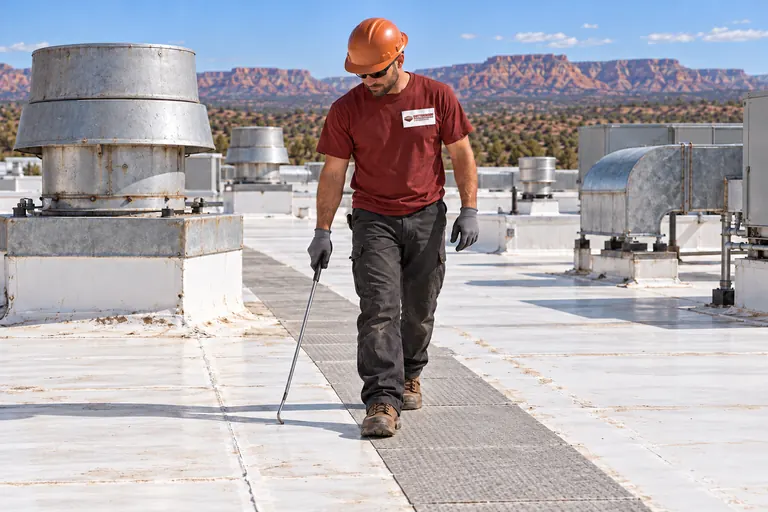
Shops and warehouses with exhaust fans, long drain runs, and maintenance traffic need walkway pads and sections closed up each evening. Tear-off goes one bay at a time.
Industrial roofing details
Recover or tear off? As a Camp Verde commercial roofing contractor, we settle it with moisture readings and core cuts before any TPO or industrial roof goes on.
 Metal Shop Building
 Wet Insulation Tear-Off
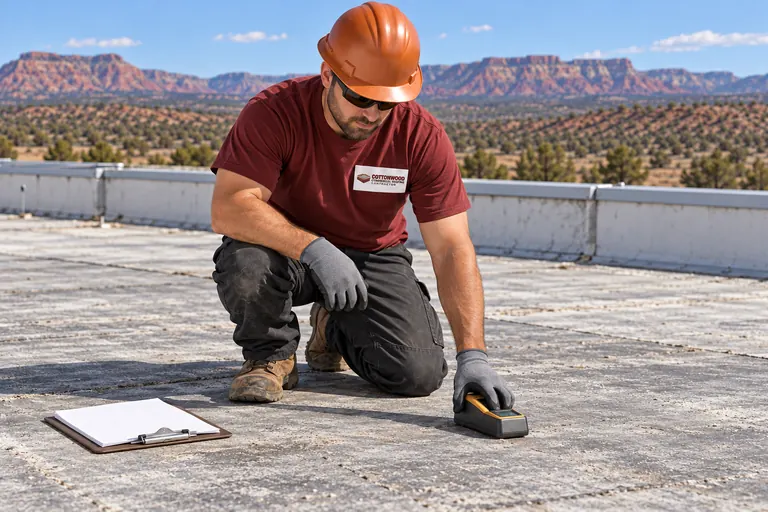 Moisture Reading
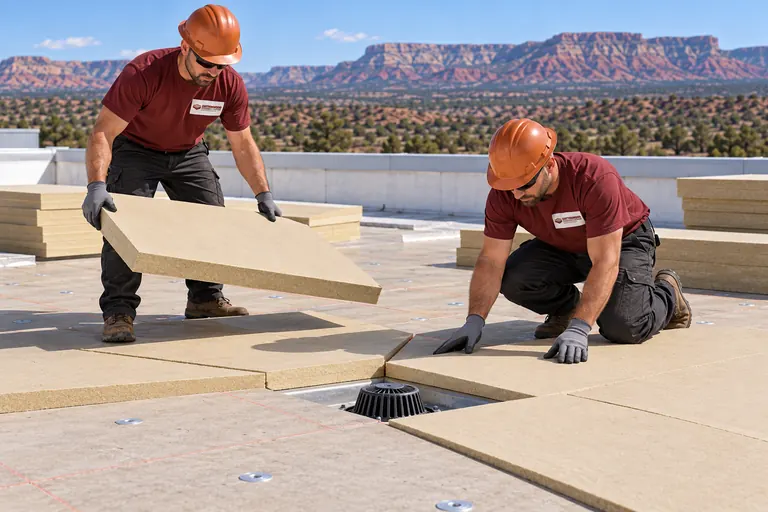
A recover puts a new membrane over the existing roof. It saves tear-off work, but only when the insulation underneath is dry and just one roof layer is in place. Wet boards left under a new sheet keep rotting the deck.
Camp Verde lists re-roofing among the projects that need a permit, and its like-for-like exemption covers one- and two-family homes only. Commercial re-roofs here go through Town of Camp Verde Development Services either way.
Trapped water rarely shows on top of the roof. These signs point to it, and each one has a fix.
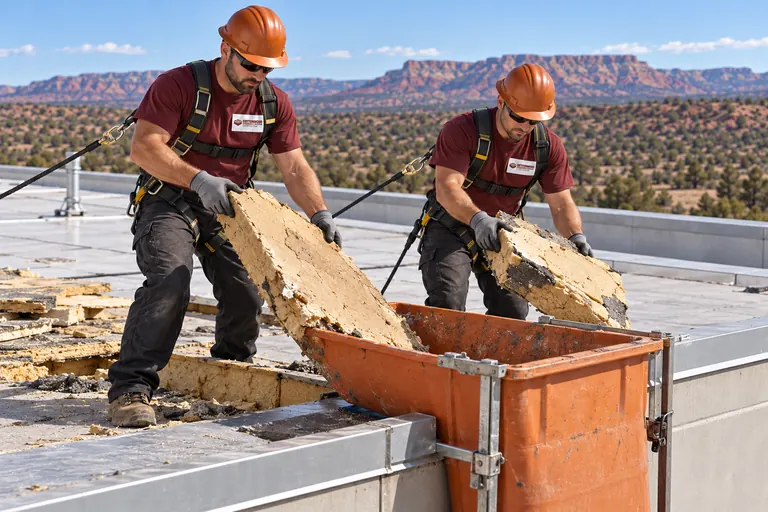
Insulation boards soaked through, which crush under foot traffic and lose their hold on the membrane.
Moisture readings outline the soft area, and the wet boards are cut out and replaced.
Moisture or air trapped between layers expands in summer heat and lifts the sheet.
Blisters are cut open, the layers underneath checked for water, and the area patched or added to the tear-off plan.
Water traveling under the membrane along the deck before dropping through a seam or fastener hole.
We trace the path with readings from the stain outward until the entry point turns up.
A previous recover over the original roof leaves no room for a third layer.
Both layers come off down to the deck, and the new roof starts from bare deck and fresh insulation.
Wet insulation compresses into low spots, which then hold even more water against the seams.
We replace the crushed boards and use tapered insulation to slope the area back toward the drains.
Wet insulation spreads with every storm. Finding it while the wet area is small keeps a recover on the table.
Before The Work
After The Work
Larger low-slope roofs and busy rooftops point to these two systems.
Shops and warehouses with exhaust fans, long drain runs, and maintenance traffic need walkway pads and sections closed up each evening. Tear-off goes one bay at a time.
Industrial roofing details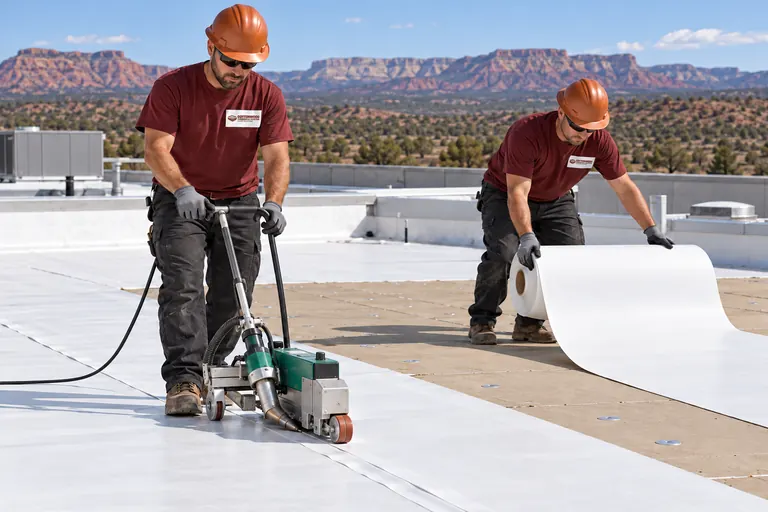
Welded TPO works as a recover sheet over dry insulation or as a full replacement after tear-off, with welds probed along every lap.
TPO roofing detailsCall and describe where the roof feels soft. Soft spots usually mean wet insulation, and the size of that area decides between recover and tear-off.
Call UsReadings come before any recommendation, and the town permit is filed once the plan is set.
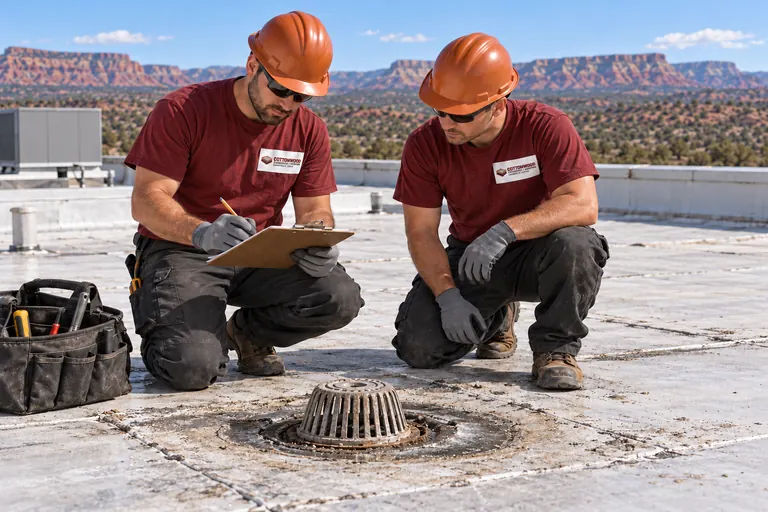
Moisture readings are taken on a grid across the roof, with extra points around stains, blisters, and soft spots, so the wet area shows up on paper.
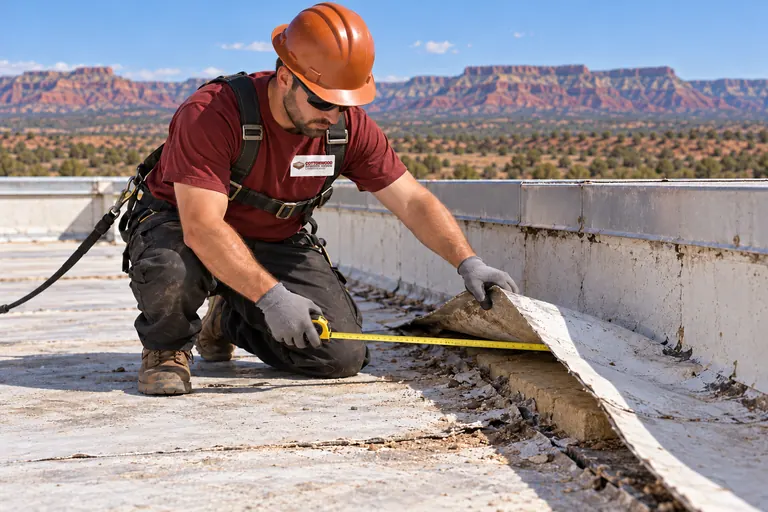
Small core samples confirm what the meter shows: how many layers sit on the deck and whether the insulation is wet or dry.
Dry insulation and one layer allow a recover. Spread-out wet boards or a second layer already in place mean tear-off, and the permit is filed with that scope.
Wet sections come out down to the deck, new insulation goes in sloped toward the drains, and each roof bay is sealed before work stops.
The new membrane is welded or taped, laps are probed for gaps, and we walk the completed roof with you, drain by drain.
North of town, the permit office and the common roof problems both shift.
Up I-17, Rimrock roofs sit exposed to monsoon gusts, so edge metal and perimeter fastening get the first look.
Along SR 260 toward Cottonwood, Verde Village retail roofs often cover several suites under one membrane.
Off the valley floor to the north, Cornville buildings tend to hold water at low spots that freeze overnight.
At the north end of SR 260, Cottonwood handles its own building permits for roofs through the city.
Answers about recovers, tear-offs, and permits for Camp Verde commercial roofs.
Plan on it. The Town of Camp Verde lists re-roofing among the projects that require a permit, and its like-for-like exemption applies only to one- and two-family homes. A commercial recover or tear-off goes through Development Services, so the filing is part of our roof scope.
A recover installs a new membrane, and often a cover board, over the existing roof. A tear-off strips everything down to the deck, replaces the insulation, and starts fresh. Recovers save labor and disposal, while tear-offs fix wet insulation and remove extra weight.
Wet insulation across large areas, two roof layers already on the deck, or a deck that flexes or shows rust or rot. Any one of those means the roof comes off, since a new membrane would trap the problem underneath.
Small ones, yes. When readings show a contained wet area, those boards are cut out, replaced, and patched with matching membrane. Once wet insulation covers a large share of the roof, patching keeps chasing leaks, and a tear-off becomes the practical fix.
Only small ones, and each is closed right away. A core cut removes a plug through the membrane and insulation to the deck, and it is patched with matching membrane right after. A handful of cores across the roof confirms what the moisture meter shows.
Most often, yes. Tear-off runs one roof section at a time, each one sealed before work stops for the evening, so the rooms below stay dry. Noisy removal can be set for early hours, and material staging stays clear of doors and loading areas.
It goes down a debris chute or lift at the roof edge and straight into a dumpster or truck, so torn-off material never sits loose on the roof or in a parking area. We place the chute away from entrances and clean up at the end of each work period.
Tell us where the roof feels soft or stains keep showing, and the moisture survey starts there.
Want A Call Back About Your Roof?
Leave a name and number and we will call to talk through the roof.
Or call now: (928) 436-4826