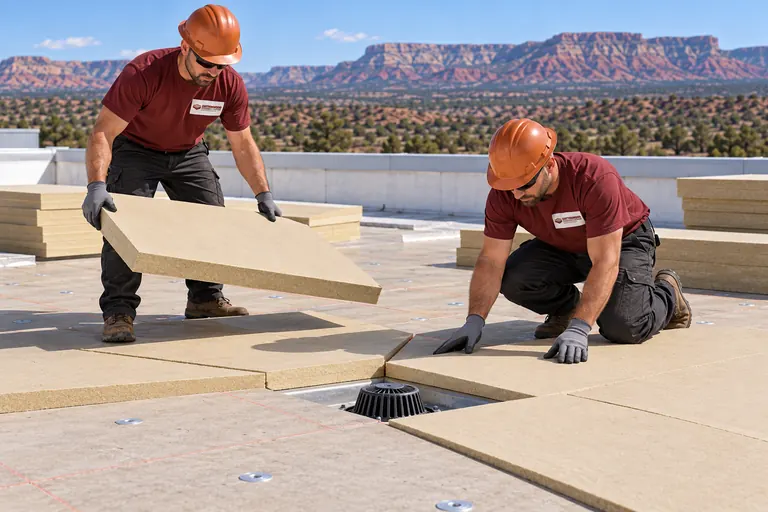
TPO Roofing
Tan and gray TPO sheets give the welded seams of a white roof without breaking the color ban. Tapered insulation underneath moves water to the drains.
TPO roofing details
As a commercial roofing contractor working in Sedona, we install and repair tan, gray, and earth-toned TPO, EPDM, and painted metal roofs that meet the city's color and reflectance rules.
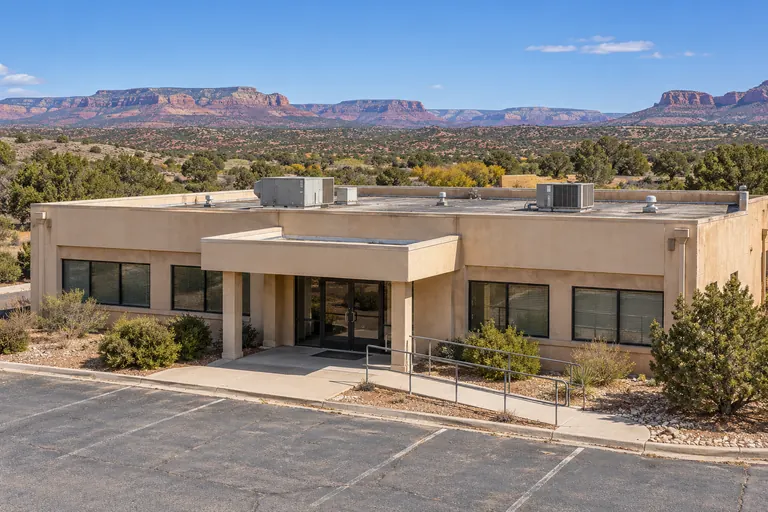 Muted Stucco Building
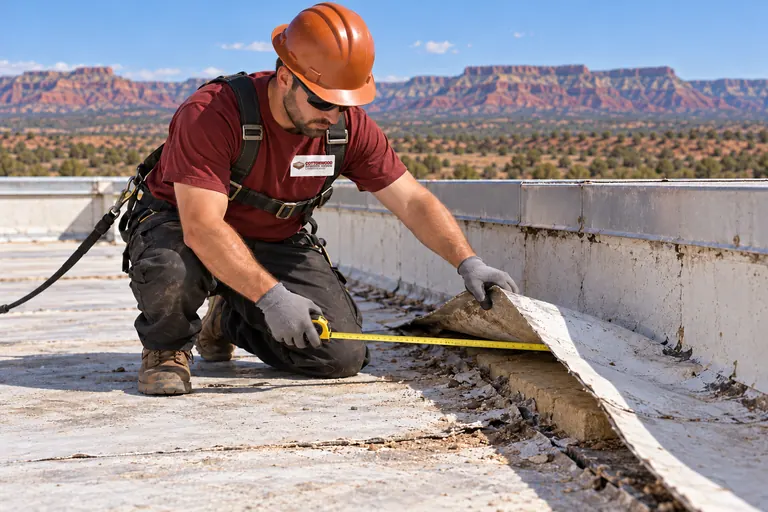
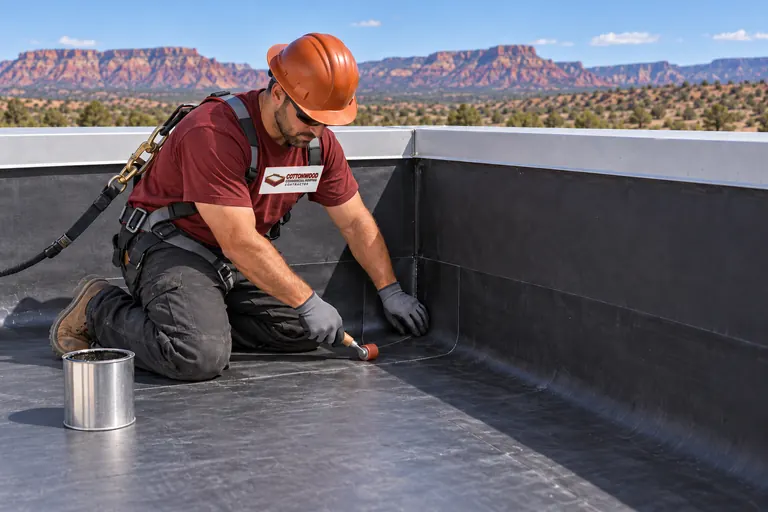 Dark Membrane Flashing
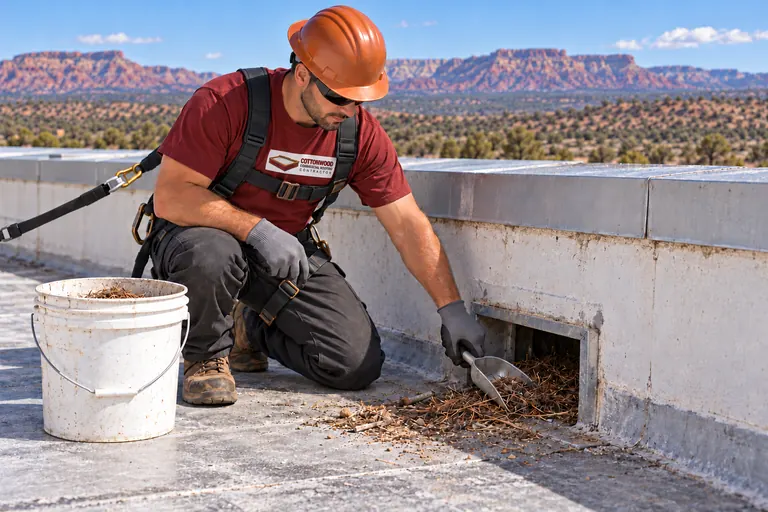 Scupper Clearing
Sedona's Land Development Code bans white, brightly colored, and reflective roofs, and it caps the light reflectance value of exterior colors by building size. That rule decides the membrane color or metal finish before we talk seams, drains, or insulation.
We bring manufacturer color data for each membrane or panel so the reflectance number is on paper before ordering.
Darker membranes and painted metal still wear out at the same places. Here is what to look for and what we do about it.
Heat building up under a dark sheet softens old adhesive and lets the membrane creep away from the laps.
We check the bond along the laps, reattach loose areas, and recommend the lightest tone the reflectance cap allows.
Factory paint breaking down at cut edges and fastener holes exposes steel to rain and snowmelt.
Rust is wire-brushed and primed, fasteners are replaced, and repainting uses a color that stays inside the code limits.
Welds that were never probed after install, or seams stressed by daily heating and cooling.
We probe every lap, reweld open sections with matching tan membrane, and patch where the sheet itself is still flexible.
Wind-blown dust and juniper litter settle at parapet scuppers and drain bowls until water backs up.
Scuppers and drains get cleared, and we check the flashing around each opening for cracks.
A bright or glossy product chosen before anyone checked its light reflectance value against the building size.
We pull the product's published reflectance data and match it to your building's size tier before ordering.
A roof that fails in a hurry leaves little time to sort out color choices. Fixing early keeps the material decision on your schedule.
Before The Work
After The Work
Three systems work under Sedona's color rules. Each card says why it fits a building here.
Tan and gray TPO sheets give the welded seams of a white roof without breaking the color ban. Tapered insulation underneath moves water to the drains.
TPO roofing details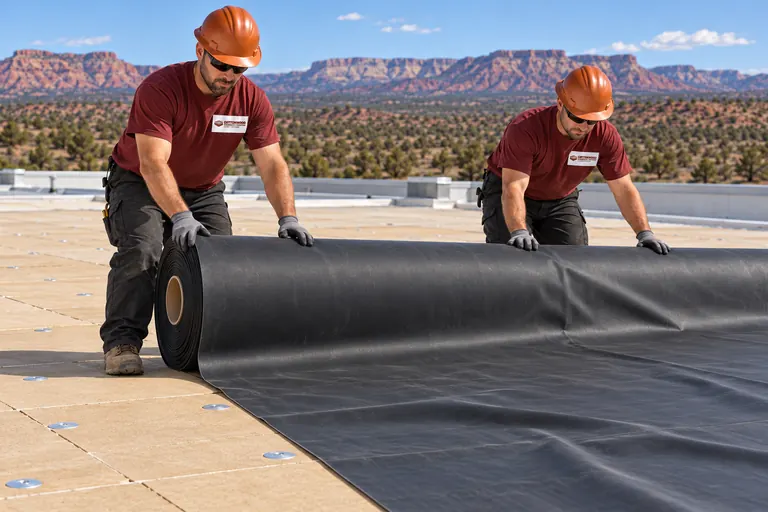
Black EPDM already sits under every reflectance cap. It fits simple low-slope roofs and handles freezing nights without cracking at the seams.
EPDM roofing details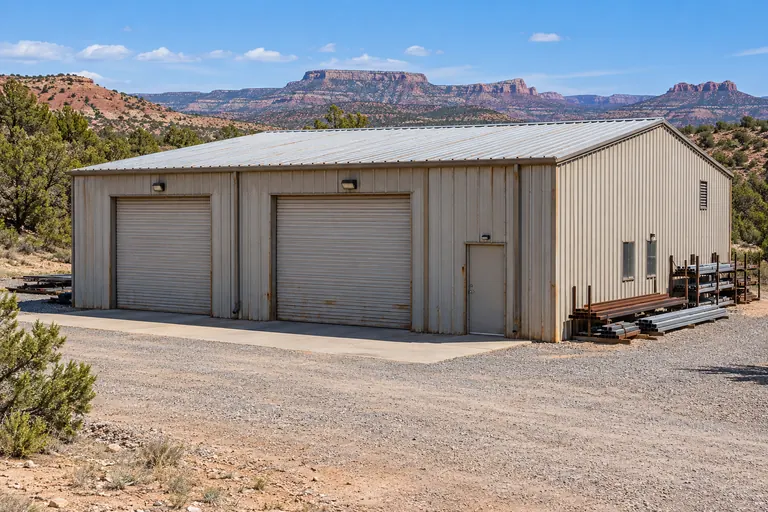
Painted or treated panels meet the rule against unpainted shiny metal. Standing seam sheds snowmelt and storm water fast on pitched roofs.
Metal roofing detailsCall and tell us the roof color and material if you know them. A matching patch keeps the repair inside the city's color rules.
Call UsThe order stays the same on every Sedona roof: inspect, confirm color and permit, then work one section at a time.
We walk the full roof, take moisture readings at soft areas, and note the current membrane color and finish so any repair can match what is already there.
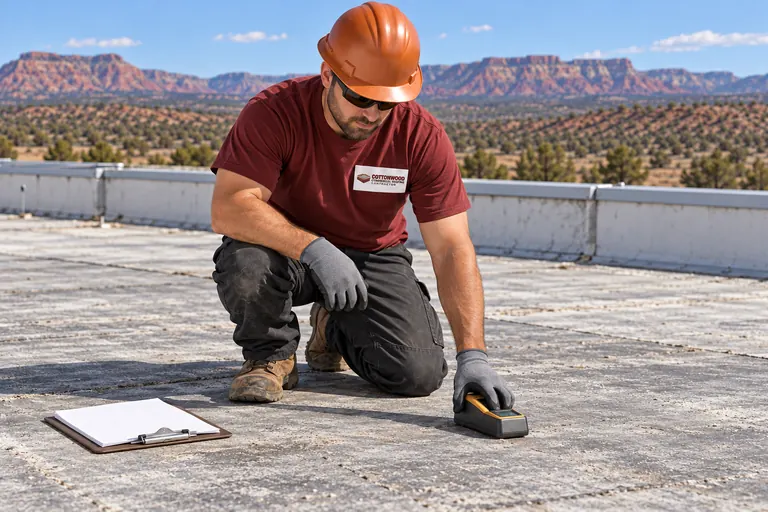
Each proposed membrane or panel is checked against the light reflectance cap for your building size, and the product data goes into the written scope.
Sedona Community Development handles building permits inside city limits, so the permit application goes in with the roof material and color listed.
Wet insulation comes out, tapered boards go in toward the drains, and every opened roof section is sealed before work stops.
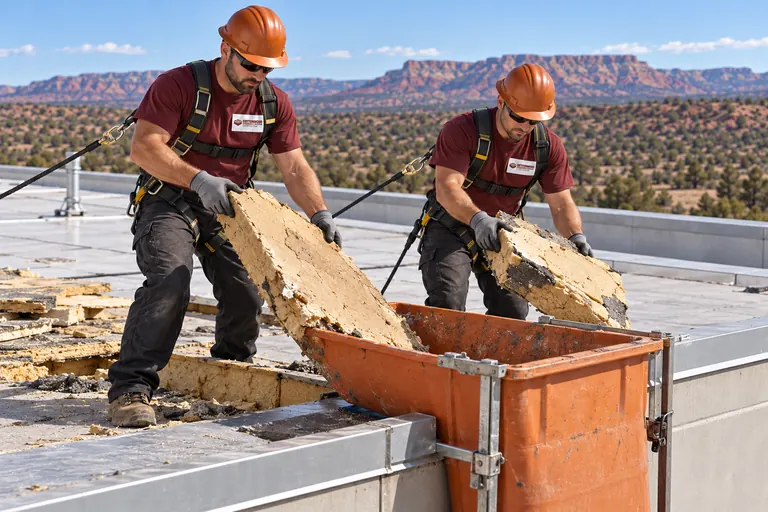
Seams are welded or taped in the approved color, edges and curbs are flashed, and we walk the roof with you to check every drain.
Leave city limits and the color rules change. Here is what sets each neighbor apart on the roof.
South on SR 179, the Village of Oak Creek falls under Yavapai County permits, so roof color choices there follow different rules.
Low-slope buildings in Cornville collect water at low spots that then freeze on winter nights.
In Cottonwood, a white TPO sheet is an option and reflects summer heat away from rooftop cooling units.
Near I-17, Rimrock roofs take monsoon gusts at the edges, so coping and edge metal get the closest look.
Answers about color, reflectance, and roof systems on Sedona commercial buildings.
Within the city's limits, yes. A bright white roof is off the table in Sedona, but tan, gray, and earth-toned membranes and coatings still cut some heat gain compared with a dark roof.
We settle the color the code allows for your building size first, then pick the most heat-resistant product that stays inside that cap.
It is the share of visible light a surface bounces back, shown as a percentage. Sedona's code sets the maximum by building size: 38% under 5,000 square feet, 28% from 5,000 to 20,000, and 20% above 20,000.
Manufacturers publish the number for each membrane color and panel finish, so we check it before ordering.
Yes, with the right finish. The Land Development Code requires metallic surfaces to be treated to reduce reflections and prohibits unpainted shiny metal.
Painted standing-seam or exposed-fastener panels in a muted color meet that rule, and we confirm the finish's reflectance against your building size before panels are ordered.
Plan on one. The City of Sedona's Community Development department handles building permits and inspections inside city limits, and the new roof still has to meet the Land Development Code's color limits. Addresses outside city limits, such as the Village of Oak Creek, go through Yavapai County instead.
Some, compared with white. A tan or gray membrane absorbs more summer sun than a white one, so the deck and rooftop units run warmer. Extra insulation under the new membrane and choosing the lightest tone your size tier allows both reduce that heat gain.
Matching starts with identifying the existing membrane or paint. We bring samples to the roof, patch or reweld with the same color where it is still made, and use the closest allowed tone where it is not.
Patches on painted metal get primer and a field-applied paint in the matching finish.
Wind carries red dust and juniper litter across flat roofs and drops it where water collects, usually at the scupper or drain. A packed scupper backs water up against the parapet flashing. Clearing them each spring and fall, and after big storms, keeps water moving off the roof.
Send the building size and current roof color, and we start with a roof walk and a reflectance check.
Want A Call Back About Your Roof?
Leave a name and number and we will call to talk through the roof.
Or call now: (928) 436-4826