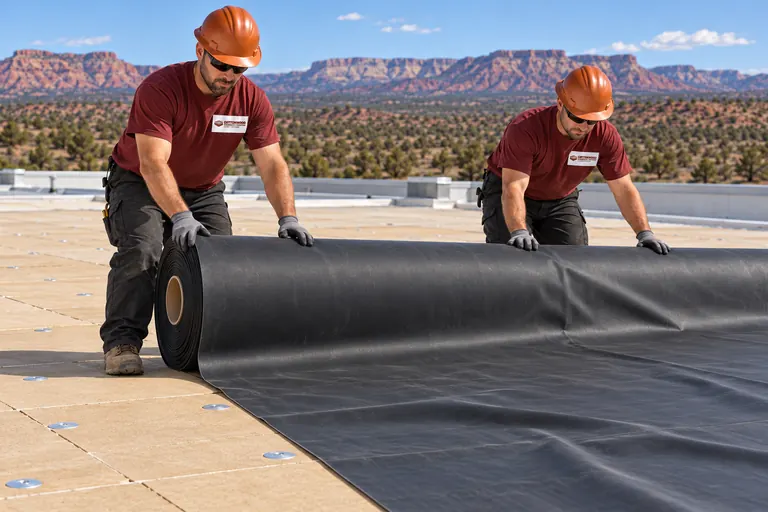
EPDM For Low-Slope Shops
Rubber stays pliable in freezing weather, and new tapered insulation can go under a fresh EPDM sheet to move water off flat sections.
EPDM roofing details
Low spots that hold water, then freeze overnight, do most of the damage on Cornville roofs. As a Cornville commercial roofing contractor, we fix the drainage and the cracks it left.
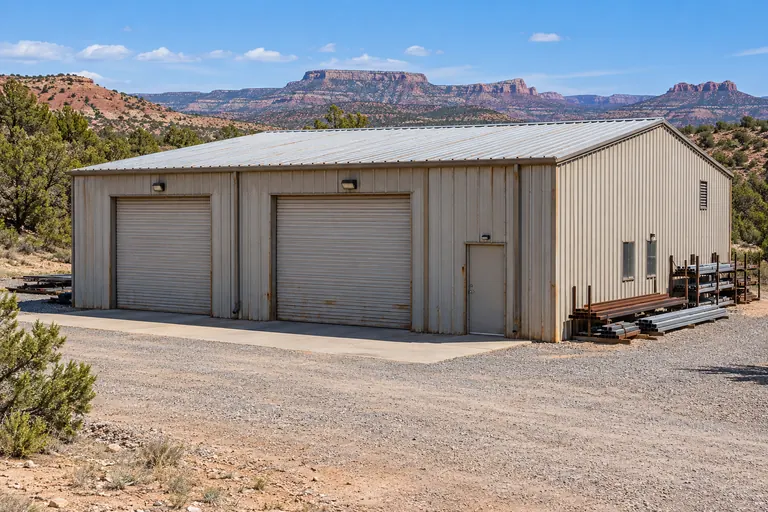 Metal Shop Building
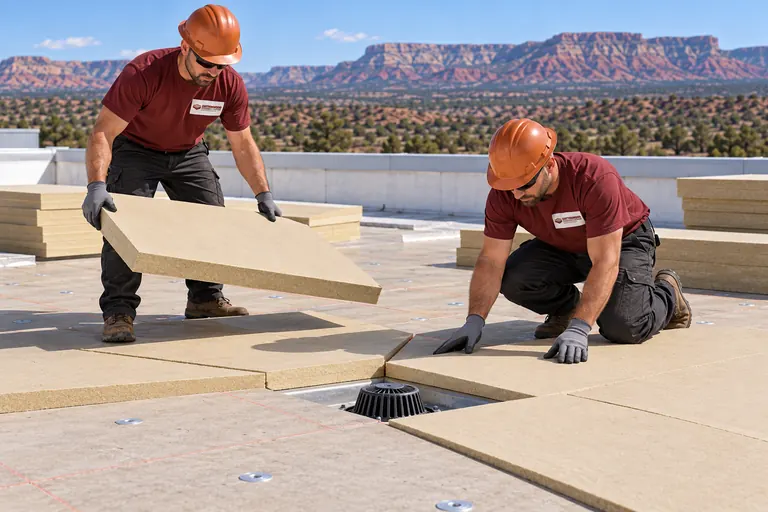 Tapered Insulation
 Scupper Clearing
Many commercial buildings around Cornville are simple low-slope boxes: shops, small offices, and storage with one or two drains or a row of scuppers. When a corner settles or insulation crushes, water sits there after every storm.
In winter that standing water freezes overnight, expands in any crack it has found, and opens the crack a little wider each cycle. Fixing the low spot matters as much as patching the crack.
Standing water works on a roof all year. Here is how each problem shows up and how we deal with it.
Water that sat for days, then evaporated and left a dirt line marking the low spot.
We measure the depth and build the area up with tapered insulation or a cricket.
Freeze cycles at night pushing apart small splits that water has already entered.
The damaged membrane is cut out, the deck dried, and a matching patch welded or taped over it.
Insulation around the drain crushed, or the drain set too high when the roof went on.
We reset the drain bowl or add a sump so water reaches it.
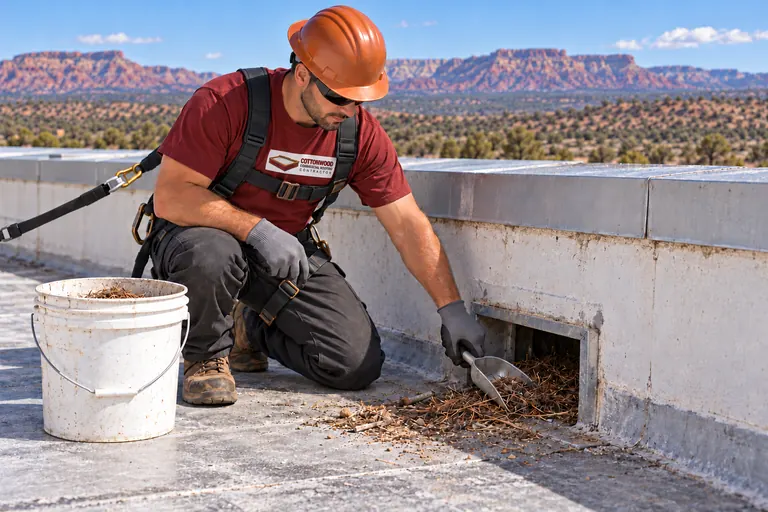
Juniper needles and red dust packed into the opening, or a lip set higher than the deck.
We clear the debris and lower or rebuild the scupper box so the roof drains through it.
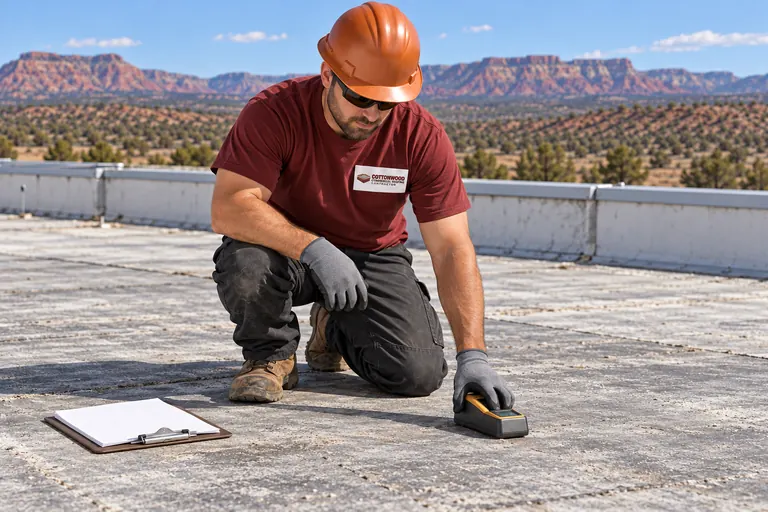
Long-term ponding soaking into insulation through tiny openings in the membrane.
Moisture readings outline the wet boards, which come out before the low spot is rebuilt.
Ponding damage grows a little every winter. Catching it early keeps the repair small.
Before The Work
After The Work
Simple low-slope buildings here usually carry rubber or metal. Both take ponding repairs well once the slope is corrected.
Rubber stays pliable in freezing weather, and new tapered insulation can go under a fresh EPDM sheet to move water off flat sections.
EPDM roofing details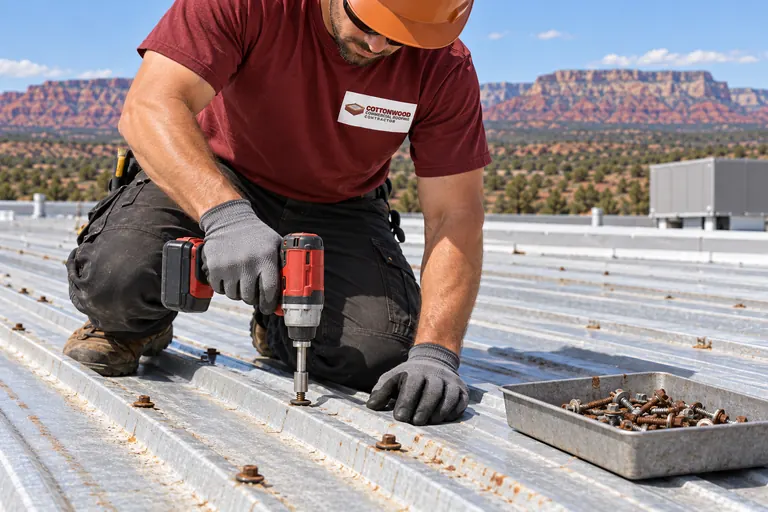
Pitched metal sheds water fast, so the work on these roofs is fasteners and laps loosened by freeze and thaw.
Metal roofing detailsCall and tell us where the puddle forms and how long it stays. A low spot that holds water through a freeze is worth fixing before winter.
Call UsThe fix starts with finding why water stays, then repairing the damage it caused.
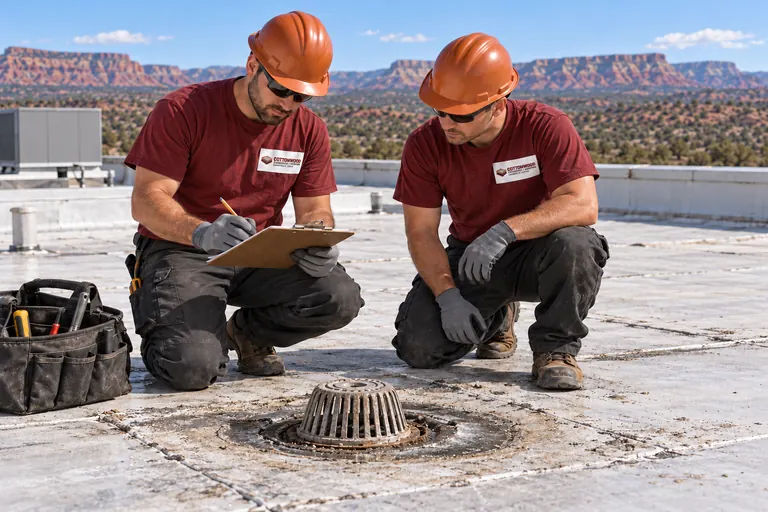
We look at the roof after rain whenever possible, marking every ponded ring, its depth, and the drain or scupper that should be taking that water.
Crushed insulation, a sagging deck, or a drain set high each need a different fix, so the cause is pinned down before anything is ordered.
Soaked boards around the low spot are cut out and carried off the roof, leaving dry deck to build back from.
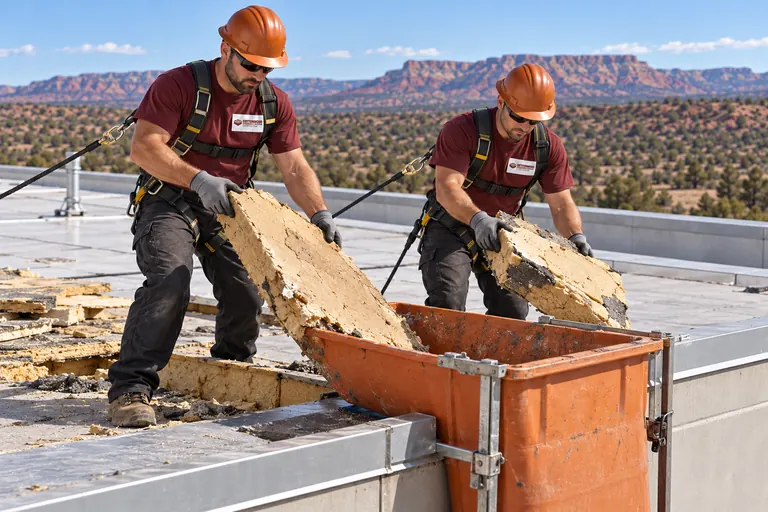
Tapered insulation or a cricket goes in to push water toward the drain, and any cracked membrane in the area is replaced.
After the work, we walk the roof with you and water-test the low corner so you can watch it run to the drain.
Cornville sits east of Cottonwood toward Oak Creek. Here is what roofs in neighboring areas usually need.
Shared retail roofs in Verde Village hide leaks that surface several suites from where they start.
Package units and vent stacks crowd Oak Creek roofs, so curb flashing gets most of the attention.
Edge metal and coping on Rimrock roofs take the hardest hits from summer wind.
Moisture surveys in Camp Verde decide whether a roof can be recovered or has to come off.
Answers about ponding, freezes, drains, and roof life on simple low-slope buildings.
TPO commonly runs about 20 to 30 years, EPDM about 25 to 30, and metal roofs often 40 years or more. Installation quality, upkeep, and exposure all move those numbers up or down.
Ponding shortens all three. Water that sits and freezes on a Cornville roof ages seams and membrane faster, so fixing low spots and checking seams each spring and fall pushes a roof toward the long end of its range.
Most roofing manufacturers treat water still standing 48 hours after rain stops as ponding that needs attention, and many limit their coverage when it goes unaddressed.
On a Cornville roof, any puddle that lasts into a freezing night is a problem whatever its size, because the ice works on every crack beneath it. Shallow puddles that clear by the next afternoon near a drain are less of a worry.
Yes, in most cases. Low areas can be cut open, built up with tapered insulation or a cricket, and covered with new membrane tied into the existing roof.
That approach works when the rest of the roof is dry and holding up. When moisture readings show wet insulation across most of the deck, a full replacement with new slope built in is the better use of the money.
Water finds its way into a hairline crack, freezes overnight, and expands as it turns to ice. That pressure pries the crack open a little more each time it happens.
Over a winter with many freezing nights, a crack you could barely see in fall can become an open split by spring. Sealing cracks in fall and fixing the ponding that feeds them breaks the cycle before it reaches the insulation.
They do, and small buildings with one or two drains feel it most. A single clogged drain on a small roof leaves water nowhere else to go, so the whole roof ponds.
Leaves, juniper needles, and red dust collect at strainers and scupper openings. Clearing them in spring and fall, and again after big storms, keeps ponding from starting and spares the membrane around the drain bowl.
A cricket is a small raised ridge, built from tapered insulation or framing, that splits water and turns it toward a drain or scupper.
Crickets are common behind rooftop units, along parapet walls, and between drains, where water would otherwise stall. Adding one is a standard fix for a recurring puddle on a low-slope roof, and it goes in under new membrane tied into the existing sheet.
Spring is the right time. Freeze-and-thaw swings make metal panels expand and contract hard, which backs screws out and stretches the sealant at panel laps.
A spring check replaces loose fasteners, reseals laps, clears gutters, and looks for rust starting at cut edges and around fastener heads before monsoon storms test the roof. Catching a few loose screws in spring costs far less than chasing a summer leak.
Cornville is unincorporated, so roofing permits go through Yavapai County Development Services rather than a city or town building department.
We check what the county requires for your scope before work is scheduled. Small repairs and full replacements are handled differently, so the answer turns on the job, and we sort out the paperwork before any material is ordered for the roof.
Tell us where water collects and how long it stays. We start with the low spots.
Want A Call Back About Your Roof?
Leave a name and number and we will call to talk through the roof.
Or call now: (928) 436-4826