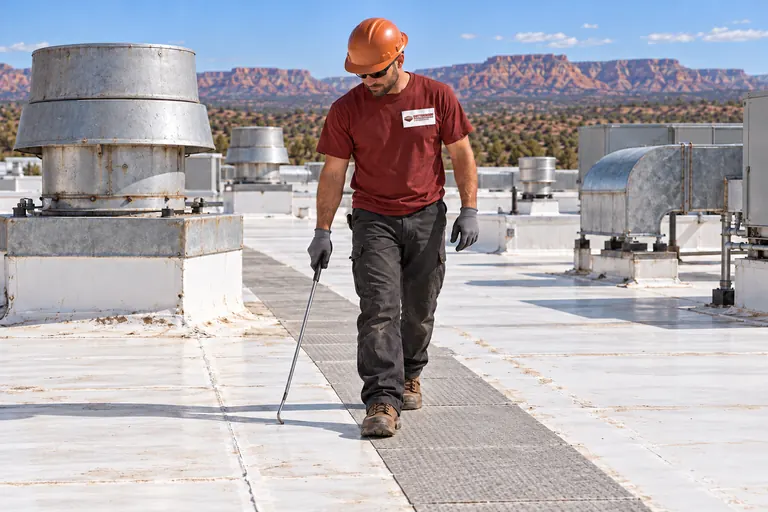
Industrial Roofing
Large steel plants often mix metal panels with membrane sections around fans and units, and both need phased work.
Industrial roofing in Cottonwood
As a commercial metal roofing contractor in Cottonwood, we replace fasteners, seal seams, treat rust, and install new panels on shops, warehouses, and steel buildings across the Verde Valley.
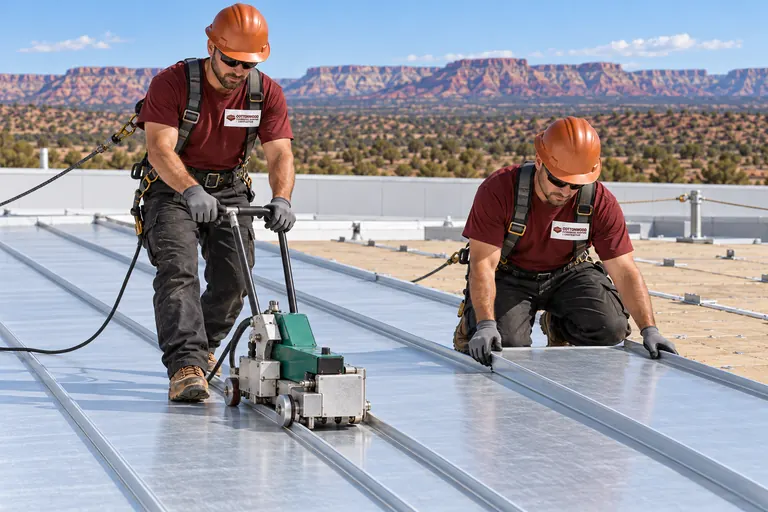 Panel Seaming
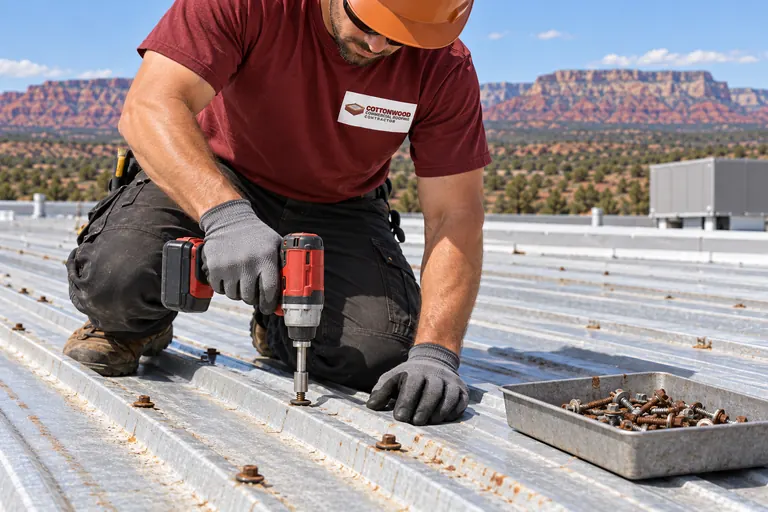 Fastener Swap
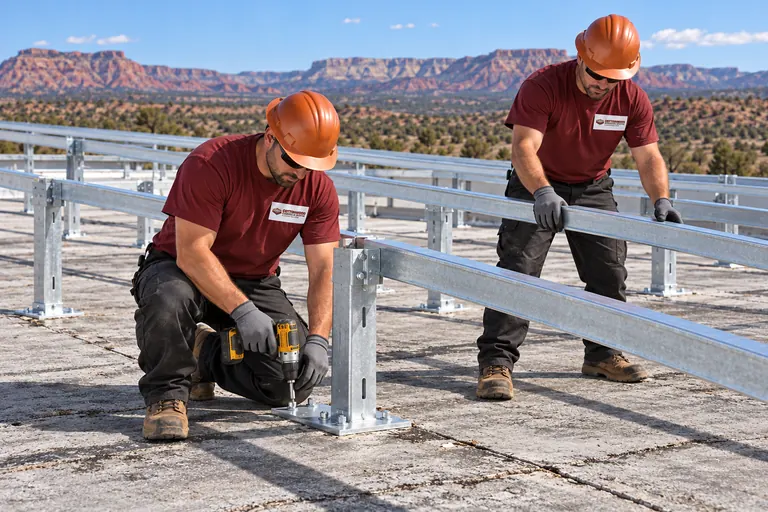 Retrofit Framing
Metal panels belong on pitched and pre-engineered buildings. Dead-flat decks and crowded equipment roofs call for a membrane.
Metal roofs leak at the places where panels are joined or fastened. These are the five we fix most.
Panels expand and contract with day-to-night swings, backing screws out and cracking their washers.
We swap in oversized screws with new washers and check every row on that slope.
Water held between overlapping panels and at cut edges eats the coating, then the steel.
Rust gets wire-brushed and treated, laps get sealed, and badly rusted panels are replaced.
Sealant dried out under high-desert sun and pulled away as the panels moved.
Old sealant comes out, and new butyl tape and closures go in at each lap.
Clips or fasteners lost their grip, letting monsoon wind get under the panel edge.
We refasten with expansion clips spaced for wind and replace any bent panels.
Bare, shiny metal on a building in Sedona or Jerome, where finish and color are regulated.
Painted or treated panels in approved colors replace the bare roof panels.
Panel condition, the structure below, and the town rules decide which of these paths a metal roof takes.
| Option | When It Fits | What We Do |
|---|---|---|
| Fastener and seam repair | Panels solid, with leaks at screws and laps | Oversized screws, new washers, butyl at laps, new ridge closures |
| Rust treatment and panel swap | Rust at laps or cut edges on a handful of panels | Brush, treat, and seal; replace panels rusted through |
| Retrofit over a flat roof | Leaking low-slope roof on a structure that can carry framing | Framing builds slope, then standing-seam panels go on |
| Full panel replacement | Rust through most panels, or failed clips everywhere | Strip and replace with standing seam or through-fastened panels |
| Finish choice | Painted panels anywhere; treated, muted finishes in Sedona and Jerome | Color samples cleared with the town before the order |
This is how a tired metal roof compares with one that has new fasteners, sealed laps, and the right finish.
Before The Work
After The Work
Call and tell us which slope shows the rust and whether drips line up with the screw rows. That tells us whether fasteners or laps come first.
Call UsMetal roof work goes row by row: fasteners and laps first, then edges and trim, with new panels only where the steel is gone.
Each screw row gets checked, closures at the ridge are pulled back, and cut edges are inspected for rust. Flat sections tied to the metal get moisture readings.
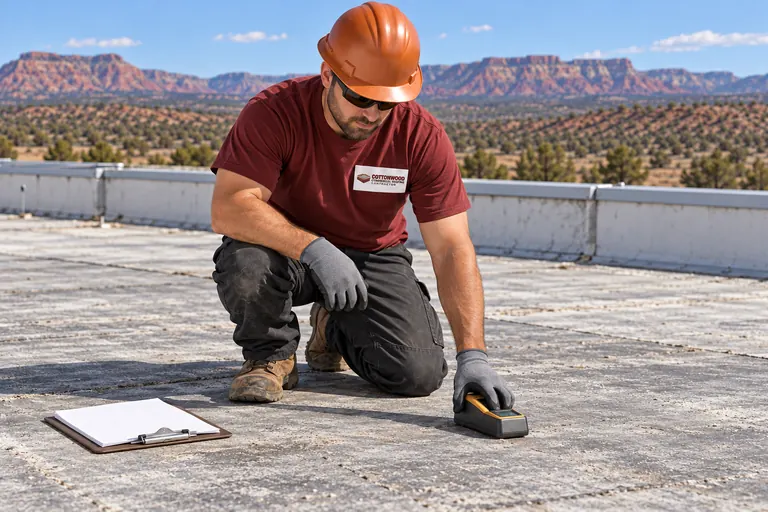
Leaks at screws and laps on solid panels mean repair. Rust through the steel, or a leaking flat roof below, points to new panels or retrofit framing.
Oversized screws with new washers go in row by row, and laps get cleaned and sealed with butyl tape before closures are reset.
Coping, eave trim, and gutters get refastened or replaced so monsoon gusts find no loose edge to lift.
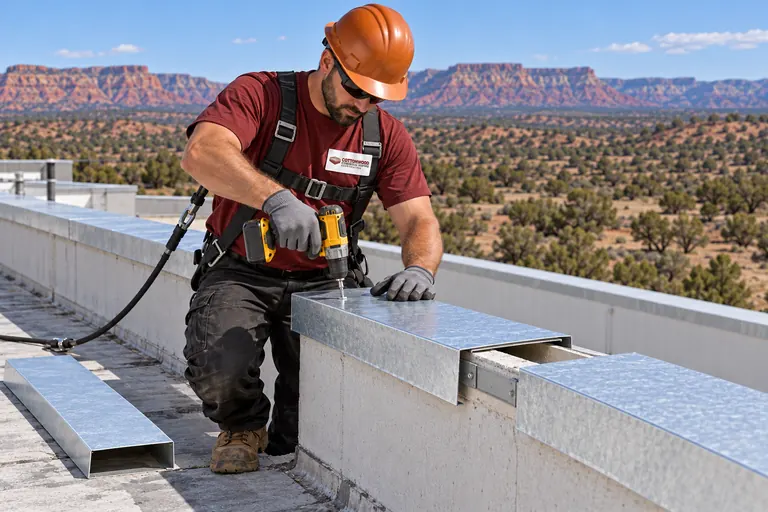
Together we walk the slope, point out each repaired lap and fastener row, and check that gutters and drains carry water off the roof.
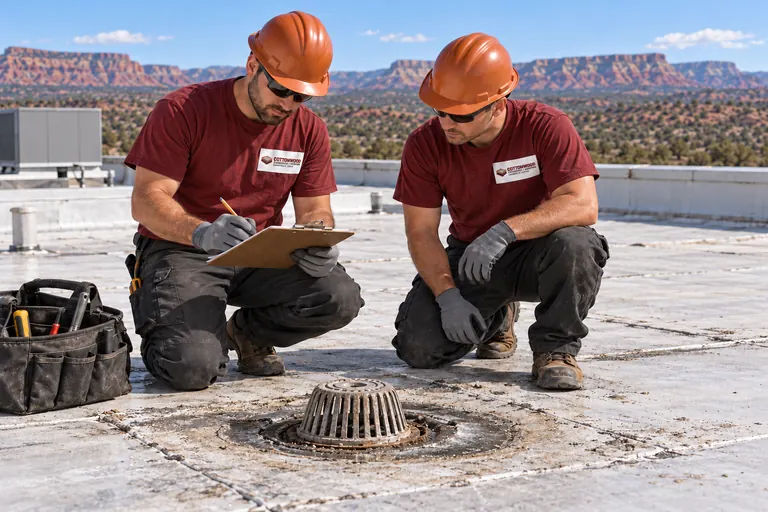
Metal buildings often sit next to flat sections or plant roofs that need a different system.
Large steel plants often mix metal panels with membrane sections around fans and units, and both need phased work.
Industrial roofing in Cottonwood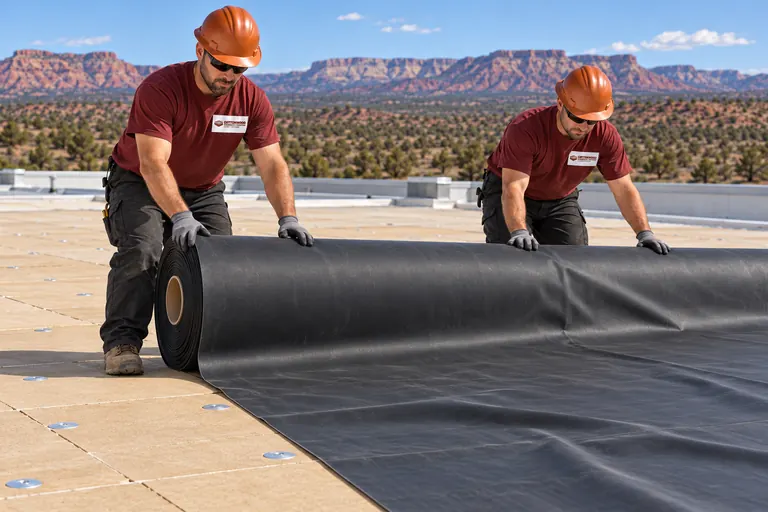
Flat sections next to a metal building flash cleanly in rubber, especially where pipes and curbs crowd the deck.
EPDM roofing in CottonwoodAnswers about metal panel roofs on Verde Valley shops, warehouses, and steel buildings.
For many steep-slope and pre-engineered buildings, yes. Standing-seam and through-fastened roofs shed water fast, resist wind uplift when properly attached, and handle temperature swings with expansion clips.
Finish matters here. Bare, shiny metal is prohibited in Sedona, and Jerome's design review covers roofing, so painted or treated panels in approved colors are the usual answer in those towns.
Standing seam hides its fasteners under raised seams and uses clips that let panels move, so it leaks less over time. Through-fastened panels cost less up front but put hundreds of screws through the roof, and each one needs checking as its washer ages.
Washers wear out before the panels do. On through-fastened roofs, rubber washers dry and crack under years of sun, and the screw lines start dripping. Checking the screw rows during routine inspections catches loose fasteners early, and a full swap to oversized screws resets the roof.
Often, when the structure can carry it. Retrofit framing is fastened over the old roof to build slope, then standing-seam panels go on top. The old roof stays in place, and a structural check of the building comes first.
Sedona's code bans white, brightly colored, and reflective roofs, requires metal to be treated to cut glare, and prohibits unpainted shiny metal. Jerome's Design Review Board reviews roofing and paint changes through its own form. We bring color samples early so approval timing stays ahead of the job.
Drips on a cold, dry morning usually come from condensation forming on the underside of the panels, where warm, moist air inside meets cold steel. Leaks follow rain and line up with screws or laps. Vapor barriers or venting fix condensation, while fasteners and sealant fix leaks.
Light surface rust gets wire-brushed, treated with a rust-inhibiting primer, and sealed at the laps. Panels rusted through, or with holes at cut edges, get replaced, since treatment cannot rebuild missing steel. We match the replacement panel profile so it laps cleanly with its neighbors.
Point us to the slope with rust or dripping screw rows, and the first visit starts right there.
Want A Call Back About Your Roof?
Leave a name and number and we will call to talk through the roof.
Or call now: (928) 436-4826