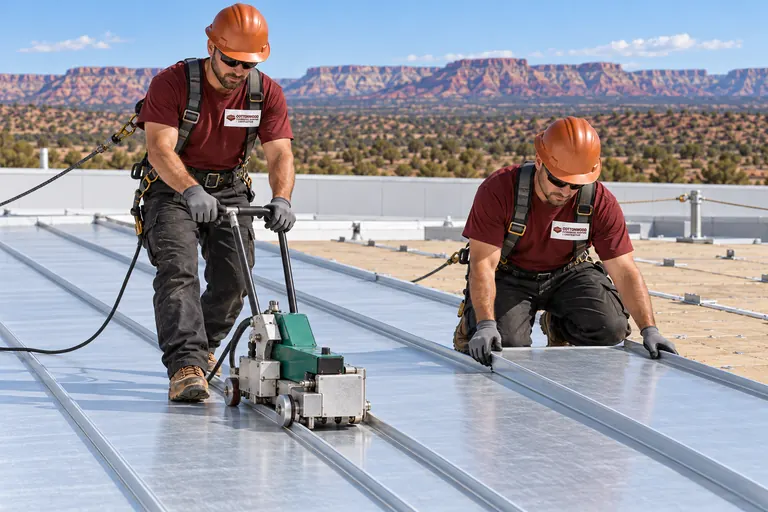
Metal Roofs And Edge Trim
Eave, rake, and ridge trim hold a metal roof together in a gust. We refasten or replace that trim, swap loose fasteners, and set new panels where needed.
Metal roofing details
Storm gusts go after the edges of a roof first. As a Rimrock commercial roofing contractor, we refasten edge metal, coping, and gutters and repair the membrane they let loose.
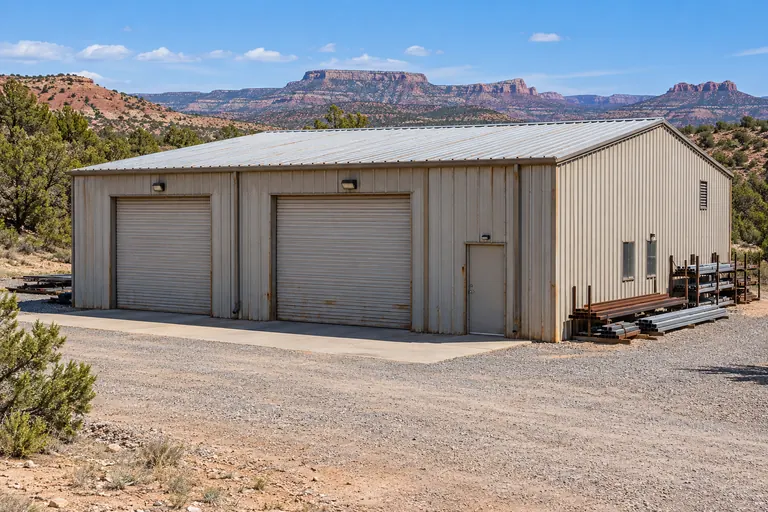 Metal Shop Building
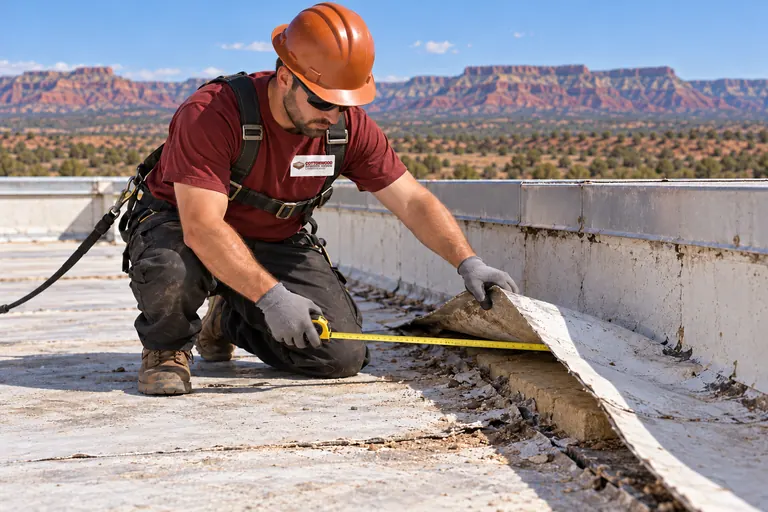 Lifted Edge Check
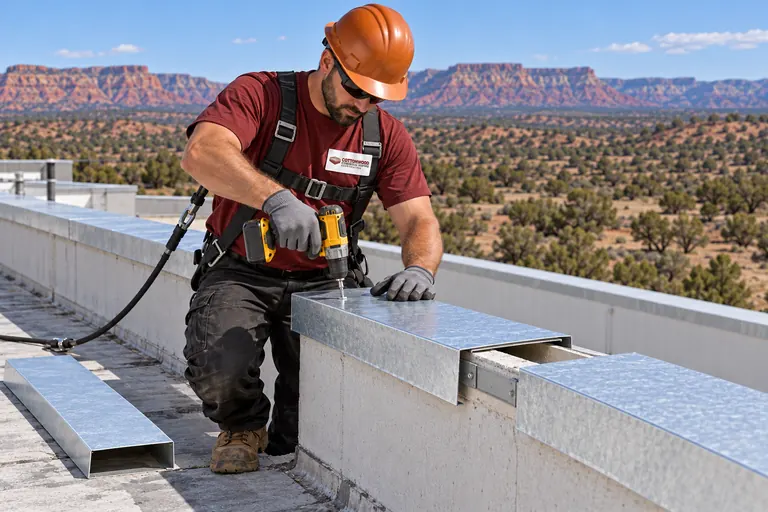 Coping Install
Wind pressure is strongest at roof corners and edges. When a monsoon gust gets under loose edge metal or coping, it lifts the membrane like a sail and can peel back several feet in one storm.
On Rimrock buildings, we look at the perimeter first: how the edge metal is fastened, whether coping joints are sealed, and how gutters and downspouts are holding up.
Edge damage starts small and grows with each storm. These are the five signs we see most.
Edge metal with too few fasteners, letting wind pry under the sheet.
We refasten or replace the edge metal and reattach the membrane under new termination bar.
Coping joints opened up, or cleats bent so the cap no longer sits tight.
Coping gets reset on new cleats with sealed joint covers.
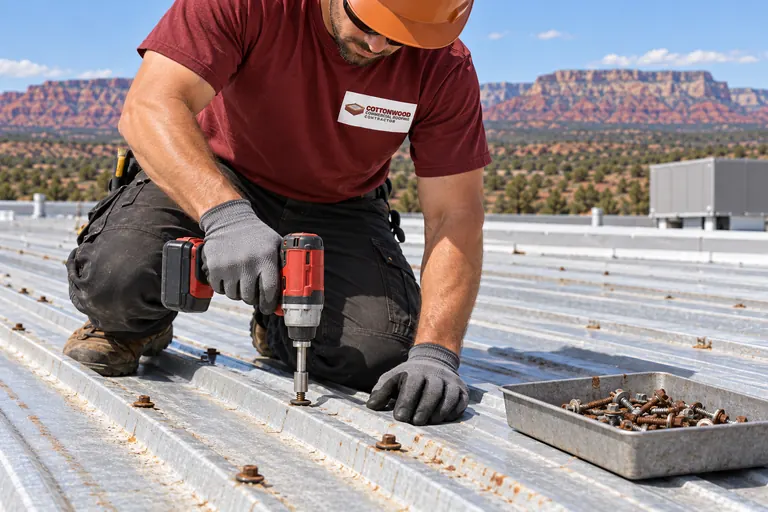
Loose cleats or backed-out screws on gutters and fascia.
We fasten every loose piece and replace bent sections before the next storm season.
Hangers spaced too far apart for the water load in a monsoon downpour.
New hangers go in at tighter spacing, and downspouts get strapped to the wall.
Panels flexing in gusts and working the eave fasteners loose.
Eave fasteners are replaced with larger screws and the closures resealed.
A loose edge takes little to refasten and a lot to repair after it peels. Here is the before and after.
Before The Work
After The Work
Perimeter work applies to every system. These two cover most of the buildings we see around Rimrock.
Eave, rake, and ridge trim hold a metal roof together in a gust. We refasten or replace that trim, swap loose fasteners, and set new panels where needed.
Metal roofing details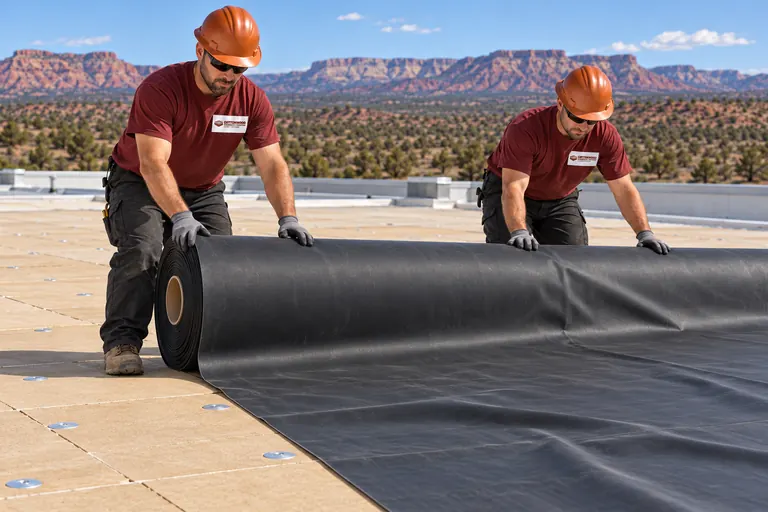
Rubber membrane that has pulled back from the edge can be reattached under new termination bar and edge metal, leaving the rest of the roof in place.
EPDM roofing detailsCall and tell us which side lifted and how far it peeled back. A loose edge left through the next gust usually gets worse.
Call UsWe start at the edges, fix what the wind loosened, and finish with every side checked by hand.
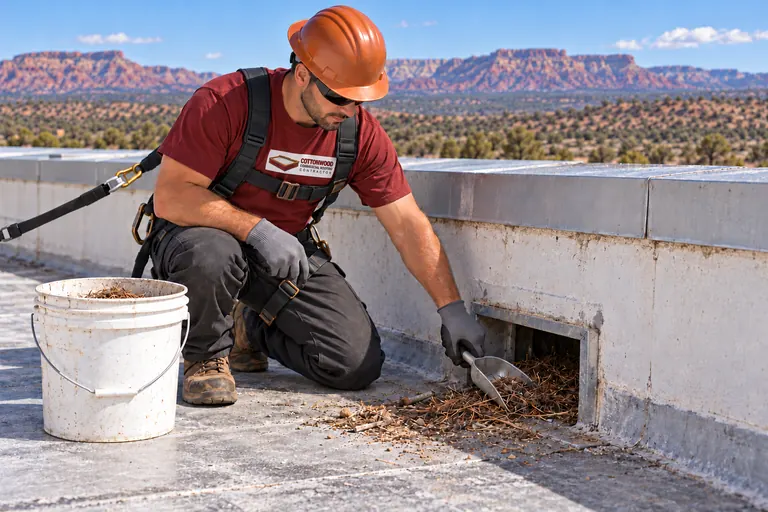
We walk the full perimeter, pull on edge metal and gutters by hand, and take moisture readings wherever the membrane lifted and let rain in.
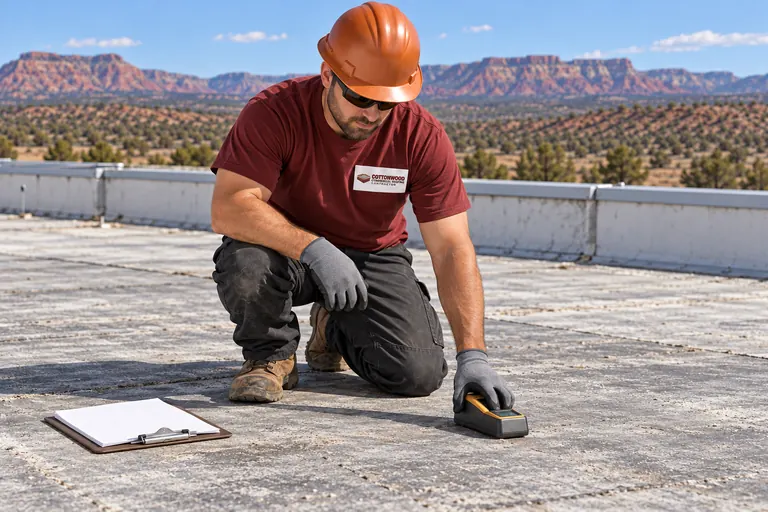
Loose fasteners, open coping joints, and bent cleats are marked on a roof plan side by side, so the repair list matches what we found.
Membrane that peeled back is laid down and secured, and any wet insulation under it is cut out and replaced with dry board.
New edge metal or termination bar goes on at tight fastener spacing, coping is reset on fresh cleats, and gutters get new hangers.
Scuppers and gutters are cleared of debris, and we finish by testing every side of the perimeter by hand with you.
Rimrock sits near I-17, southeast of Cottonwood. These neighboring areas are covered too.
South along I-17, Camp Verde roofs often come down to a choice between recover and tear-off.
Roofs in the Village of Oak Creek carry tight clusters of units, vents, and gas lines to flash.
Cornville's simple flat roofs need their low corners built up before freezes crack them.
Sedona caps roof color and reflectance, which narrows the membrane and metal choices.
Answers about wind, edge metal, coping, gutters, and keeping a business open during roof work.
In most cases, yes. Roof work runs in sections, so customers, tenants, and production carry on below while one side of the building is being worked on.
Noisy tear-off goes to early mornings or weekends when possible, HVAC shutdowns are arranged ahead with building staff, entrances and fire lanes stay clear of material, and each section is dried in before the crew leaves. Heavy work moves out of peak monsoon afternoons.
Wind speeds up as it flows over a building, and the strongest uplift lands at the corners and along the perimeter of the roof.
When edge metal is short on fasteners or the termination has worked loose, that uplift gets a grip under the membrane. Once the edge lifts, each gust pulls a little more of the sheet free, and rain follows it in.
Walk the roof edge on a calm day and push gently on the metal. Any section that moves, rattles, or shows a gap at the wall needs fasteners.
Other clues are wrinkles in the membrane a foot or two in from the edge and rust streaks below fastener heads. Stay well back from the edge and use fall protection, or have us check it during an inspection.
Late spring, before the monsoon season that the National Weather Service dates June 15 to September 30.
A spring check catches edge metal and coping loosened by winter wind and freeze cycles while there is still time to fix them. Plan a second look after any storm that brings strong gusts, since a single event can lift an edge that was already loose.
Rehanging works when the gutter itself is straight, sealed at the joints, and free of rust holes along the bottom.
Gutters that have bent, split at seams, or rusted through get replaced, usually with heavier gauge and closer hanger spacing so they hold up under monsoon downpours. Downspouts are strapped tight to the wall either way, and outlets are cleared of debris.
Sometimes, when the sheet is clean and undamaged and the insulation underneath is still dry.
A membrane that has been flapping usually has creased or torn areas, and rain has often reached the insulation below. In those cases we cut out the damaged part, replace wet boards, and tie in new membrane under fresh termination bar and edge metal.
It does, and the water often shows up far from the wall. Coping joints open as the metal moves with heat and cold, and rain running along the cap slips through and down the inside of the parapet.
From there it travels behind the base flashing and can surface in a ceiling several feet away. Sealed joint covers and new cleats stop it at the top of the wall.
Both hold up when the perimeter is built right, so the edge detail matters more than the field system.
Metal roofs need eave and rake trim fastened at close spacing and closures sealed. Membrane roofs need termination bar and edge metal fastened along the whole perimeter, with extra fastening at the corners where uplift is highest.
Tell us which edges have moved or which gutters sag. We start the walk at the worst corner.
Want A Call Back About Your Roof?
Leave a name and number and we will call to talk through the roof.
Or call now: (928) 436-4826