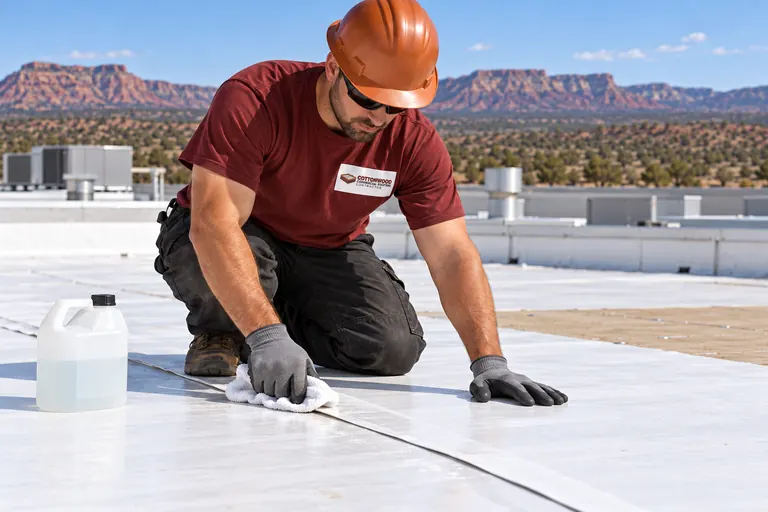
TPO Roofing
White welded sheets suit flat retail and office roofs over cooled space, where heat-welded seams replace taped laps.
TPO roofing in Cottonwood
As an EPDM roofing contractor in Cottonwood, we install and repair rubber roofs on large, simple low-slope buildings across the Verde Valley. Seams and pipe boots get fixed first.
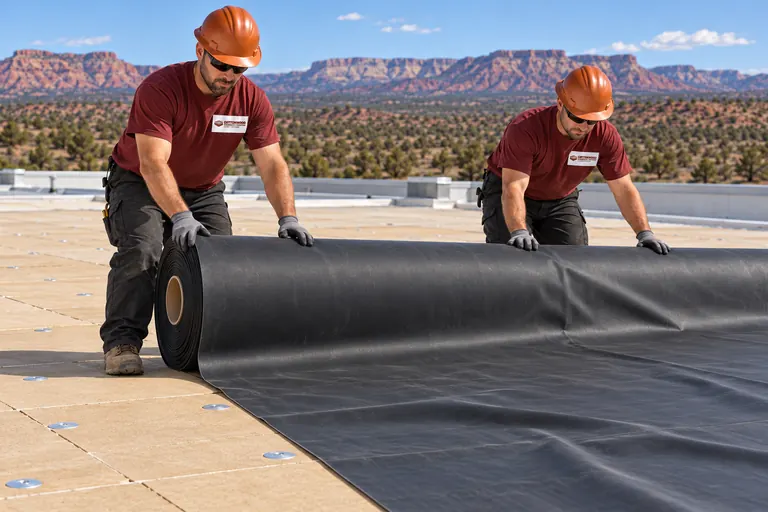 Sheet Install
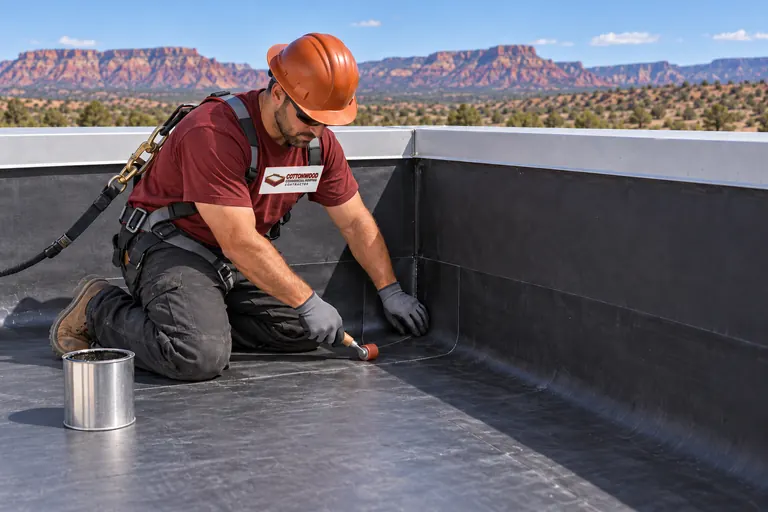 Parapet Corner
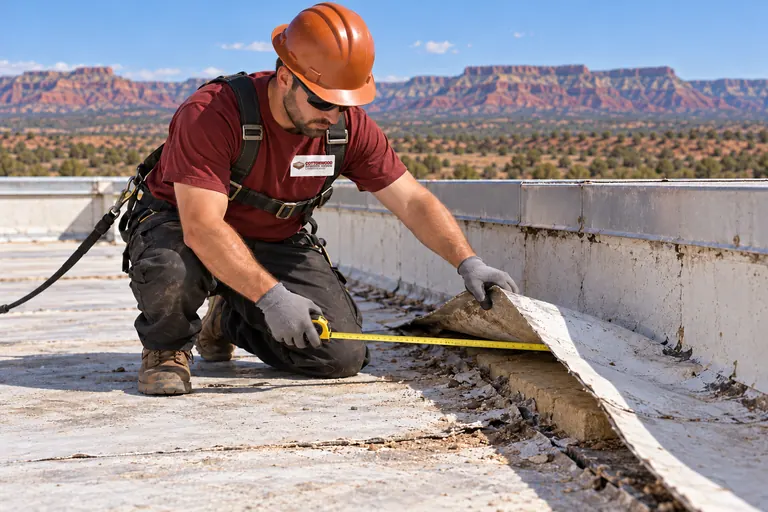 Edge Check
EPDM shines on wide, plain decks that freeze in winter. Cooled retail space and pitched shops lean toward other systems.
Rubber roofs rarely wear out in the middle of the sheet. Trouble starts at laps, boots, and corners.
Seam tape or older lap adhesive dried out under years of sun and let go at the edges.
We clean and prime the lap, apply new seam tape, and roll it down hard.
Pipe boots cracked, or slid down the pipe as the sheet shrank with age.
Old boots come off, and new molded boots get taped and clamped in place.
Shrinking membrane pulls tight at parapet corners and tears the flashing open.
We relieve the tension and install new corner flashing in uncured EPDM.
Drains set above the surrounding deck, or insulation under that corner compressed over time.
We lower the drain or add a tapered cricket, then patch any seams the standing water softened.
Water entering at one lap travels under a loose sheet before it drips through the deck.
Moisture readings trace the wet path back to the lap so the repair lands in the right spot.
The condition of the laps and the insulation decides which of these four options fits your rubber roof.
| Option | When It Fits | What We Do |
|---|---|---|
| Seam and boot repair | Dry insulation, with failures limited to laps, boots, and corners | Prime and retape laps, replace pipe boots, reflash corners |
| Recover with new EPDM | One existing layer over dry boards confirmed by moisture readings | Lay cover board and a new adhered or fastened sheet |
| Tear-off and replace | Wet insulation over large areas, two layers, or brittle shrunken rubber | Strip to the deck, replace wet boards, install new EPDM |
| Surface color choice | Black meets Sedona limits; white-on-black cuts heat gain elsewhere | Pick the sheet surface before the order is placed |
Compare the rubber roof you have now with one that has fresh laps, boots, and corners.
Before The Work
After The Work
Call and describe where the seam edges curl and how close they sit to vent pipes or the parapet. That shapes the repair plan before we climb up.
Call UsRubber roof work starts with the laps and boots, then moves to the field sheet only where the insulation below is wet.
We pull on seam edges, look at every boot and corner, and take moisture readings across the field to find water traveling under the rubber.
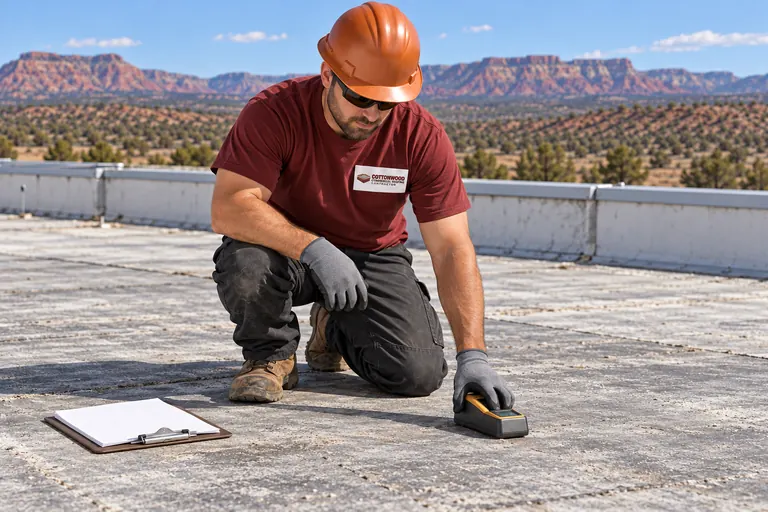
Dry areas with failed tape or cracked boots are marked for repair. Soaked boards and brittle, shrunken rubber are marked for removal on the roof plan.
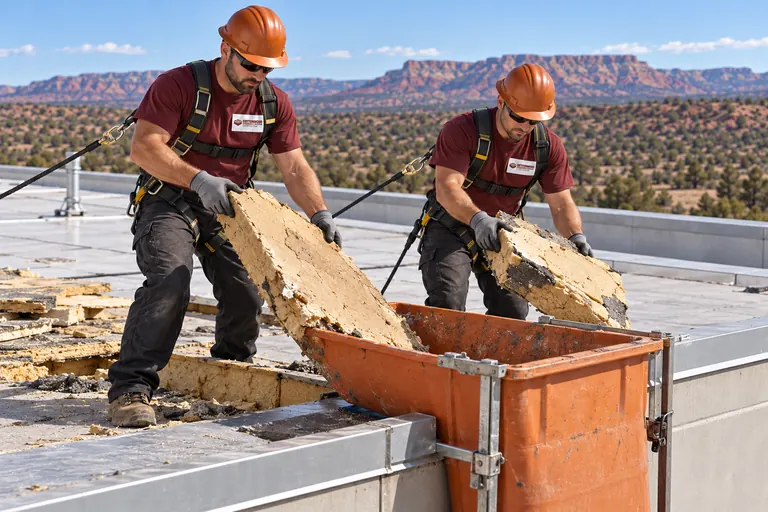
Torn-off insulation goes down a debris chute, and the opening is covered so the rest of the roof stays dry until new boards go in.
Large rubber sheets unroll over cover board. Laps are cleaned, primed, and taped, and each seam is rolled with a hand roller to set the bond.
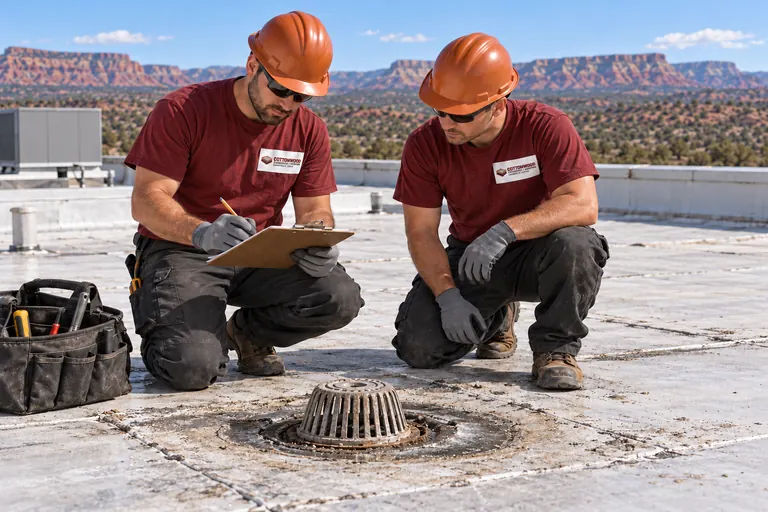
Pipe boots, corners, and edge metal get flashed last. Then we walk the roof with you, checking drains and every taped lap.
Owners weighing a rubber roof often ask about these two systems as well.
White welded sheets suit flat retail and office roofs over cooled space, where heat-welded seams replace taped laps.
TPO roofing in Cottonwood
Pitched shops and steel buildings shed water faster under metal panels than under any membrane, so metal often wins there.
Metal roofing in CottonwoodAnswers about rubber roofs on Verde Valley commercial buildings.
EPDM fits large, simple low-slope roofs where flexibility matters more than reflectivity. The rubber stays pliable through cold snaps, which helps buildings that freeze and thaw all winter.
Older EPDM roofs tend to fail at seams and penetrations first, so targeted repairs there can add years of service before a full tear-off.
Black rubber absorbs more summer heat than a white sheet, which raises the load on the cooling units below. White-on-black EPDM or a light coating over the sheet reduces that gain. In Sedona, dark rubber is an advantage because the city caps how much light a roof reflects.
Yes, in most cases, as long as the sheet itself still bends without cracking. We clean the lap down to bare rubber, prime it, and apply new seam tape. Once the rubber cracks when folded, repairs stop paying off and replacement makes more sense.
Loose-laid and older adhered EPDM lets water run under the sheet before it finds a gap in the deck. The ceiling stain shows where water dripped, and the entry point can sit several feet upslope. Moisture readings trace the wet path back to the opening.
It handles crowded roofs well. Molded pipe boots and uncured flashing stretch around odd shapes, which makes detail work around vents, curbs, and conduit easier than with stiffer membranes. We still add walkway pads near units so service traffic stays off the field sheet.
Age and heat. Older rubber loses flexibility and pulls back from parapets and edges, tearing the flashing at the corners. Shrinkage that has only split a few corners can be reflashed, but a sheet that has shrunk across the whole roof needs replacement.
Square footage first, then the condition underneath. Wet insulation to replace, the number of pipe boots and curbs, parapet height, and whether the old sheet comes off all add labor. Seam repair on a dry roof costs far less than a new sheet.
Tell us where the rubber is lifting or cracking, and the first visit begins with a test of the seams and boots.
Want A Call Back About Your Roof?
Leave a name and number and we will call to talk through the roof.
Or call now: (928) 436-4826