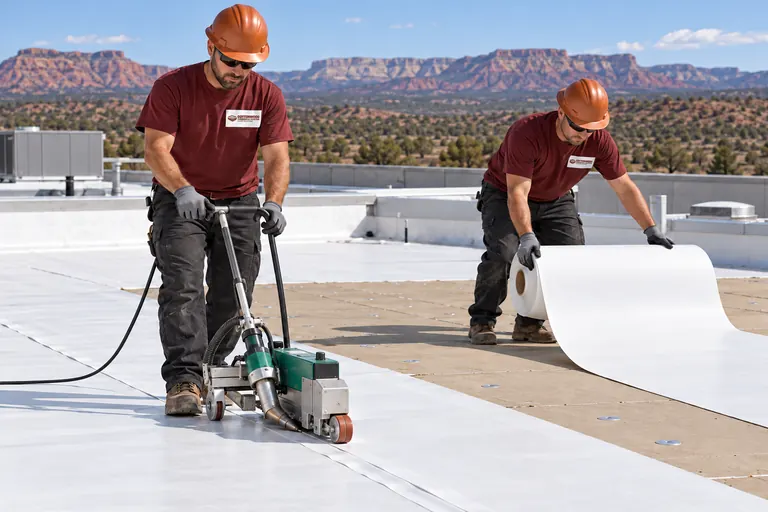
TPO Roofing
Heat-welded TPO covers most warehouse decks well, and its welded laps take wind-driven rain on long, open roofs.
TPO roofing in Cottonwood
As an industrial roofing contractor in Cottonwood, we repair and replace big roofs on warehouses, shops, and plants with fans, units, and long drain runs. Work goes in sections.
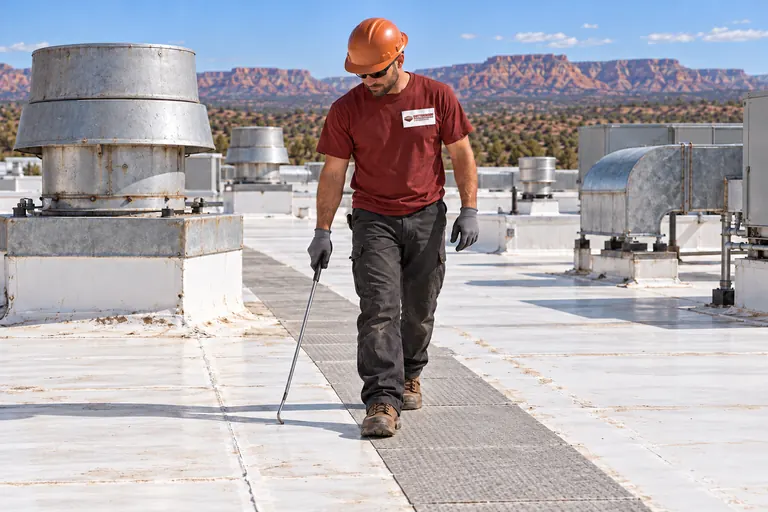 Walkway Check
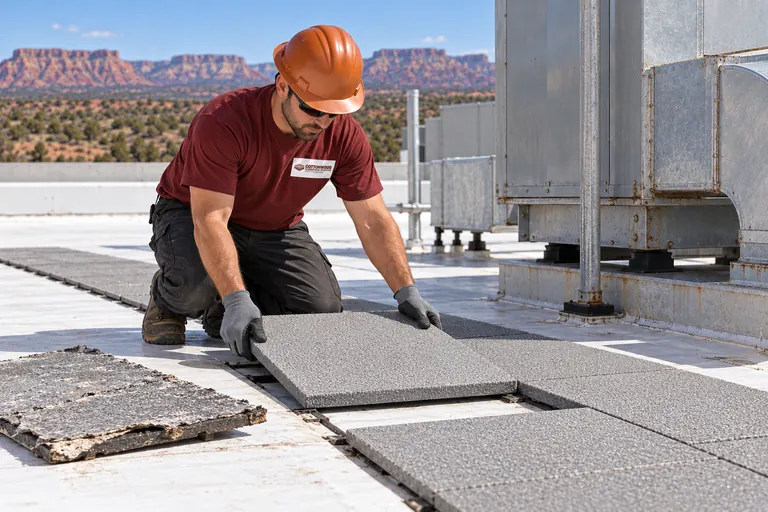 Walkway Pads
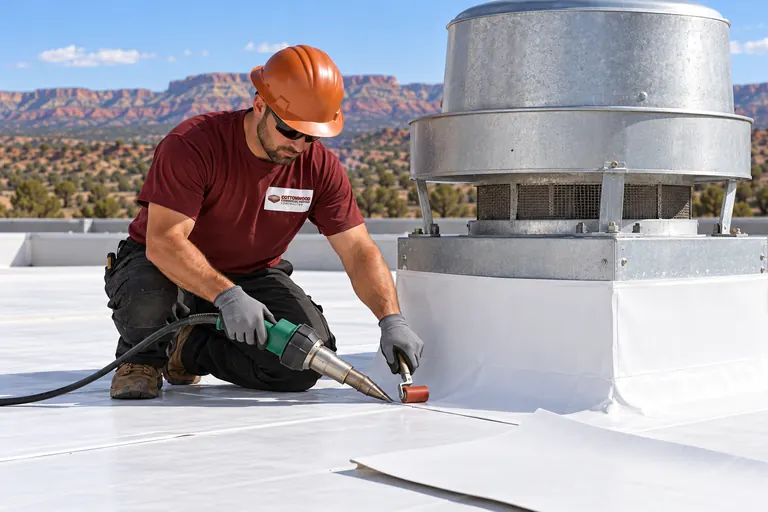 Fan Curb
Industrial roofing is about big decks, rooftop equipment, and the work going on underneath. Smaller or simpler buildings fit other services.
Equipment, foot traffic, and long spans wear an industrial roof in predictable places. These five turn up most often.
Tools, carts, and boots crossing the same strip of membrane to reach units and fans.
We patch the punctures and lay walkway pads along the paths people actually walk.
Vibration and heat at the fan curb crack the sealant and split the flashing corners.
New curb flashing goes in, with reinforced corners where the fan shakes the curb.
Long drainage runs, too few outlets for summer downpours, and dust packed in the strainers.
We clear and resize drains, add overflow scuppers, and taper insulation toward the outlets.
Chemical or oil exhaust settling on the roof breaks down a membrane never rated for it.
We identify the exhaust and choose TPO, EPDM, or metal that holds up to it.
Deflection in a long roof span leaves low bays where water collects after every storm.
Tapered insulation and crickets rebuild slope so water reaches the drains.
Plant roofs mix repair, recover, and replacement across different bays. These four options cover most decisions.
| Option | When It Fits | What We Do |
|---|---|---|
| Targeted repair | Damage limited to paths, curbs, and a few seams | Patch punctures, reflash curbs, add walkway pads |
| Recover in sections | Dry insulation under one existing layer | New membrane over cover board, one bay at a time |
| Tear-off and replace | Wet insulation across large areas, or two layers | Strip each bay to the deck and close it up before the crew leaves |
| Material choice | Chemical exposure, vibration, and equipment load on the deck | TPO, EPDM, or metal picked for what the plant puts on the roof |
Here is the difference between a worn plant roof and one rebuilt for the traffic and equipment it carries.
Before The Work
After The Work
Call with the fan or unit location and what runs below it. Any shutdown gets planned with your facility staff before work starts.
Call UsBig roofs are worked in bays, so the plant below keeps running while each section is opened, rebuilt, and closed.
We walk each bay with a moisture meter, mark wet insulation, and note every fan, stack, and pipe support that crosses the membrane.
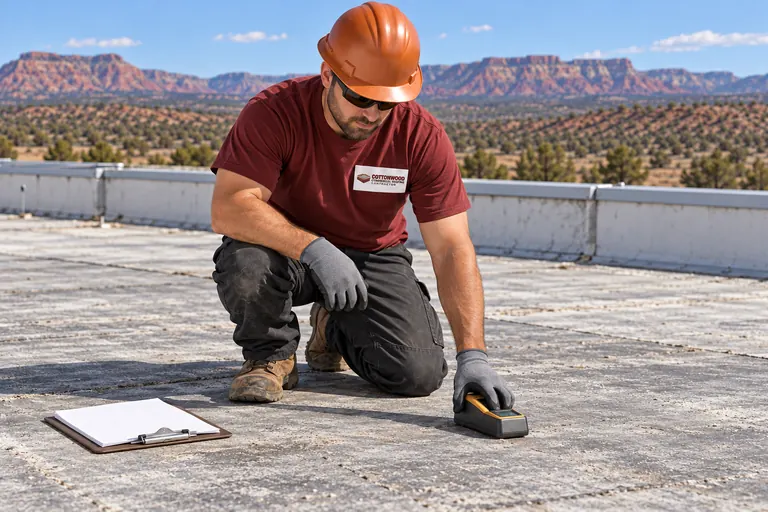
Sections are sized to match shifts and shutdowns. HVAC and exhaust units near an open bay are switched off only after building staff sign off on the timing.
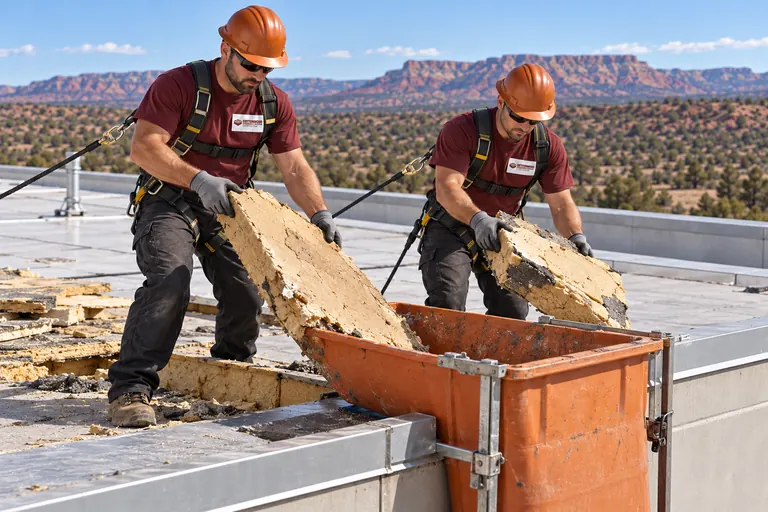
Wet insulation comes out one bay at a time, and each opened bay is covered before the crew leaves so the lines below stay dry.
Tapered insulation goes in toward the drains, membrane follows, and curbs at fans and stacks get reinforced flashing for the vibration they see.
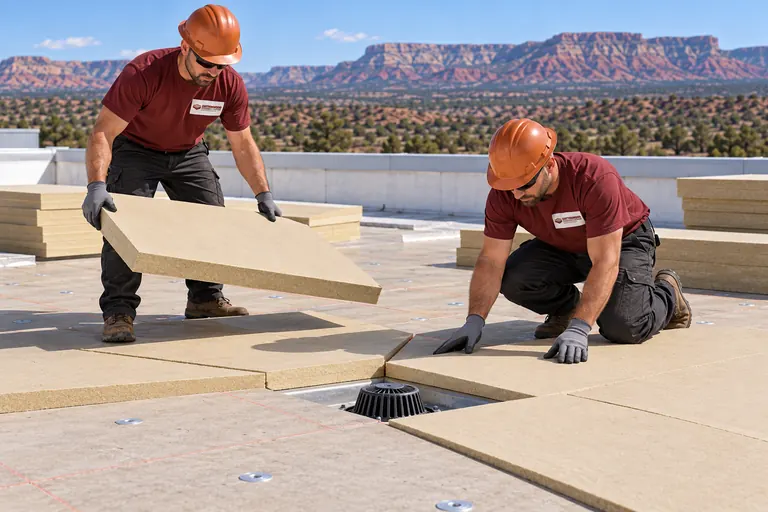
Walkway pads go down along the routes service crews use, and we walk the finished bays with your facility manager to check drains and curbs.
Industrial decks often combine more than one system. These two come up most often.
Heat-welded TPO covers most warehouse decks well, and its welded laps take wind-driven rain on long, open roofs.
TPO roofing in Cottonwood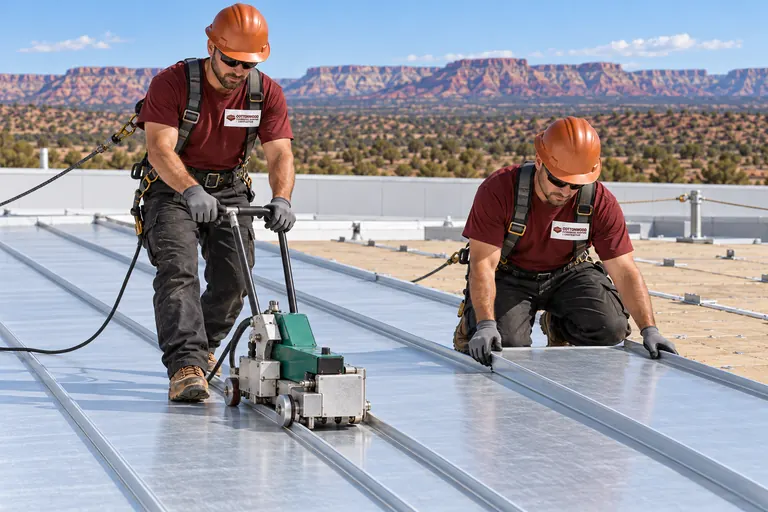
Steel shops and pitched storage buildings get standing-seam panels that shed rain fast and carry little foot traffic.
Metal roofing in CottonwoodAnswers for facility managers running warehouses, shops, and plants under the roof.
It covers big-footprint buildings such as warehouses, fabrication shops, storage facilities, and utility structures. These roofs carry heavy rooftop equipment, long drainage runs, and steady foot traffic from maintenance crews.
The work centers on walkway pads around HVAC units and fans, drains and scuppers sized for summer rain, membranes or panels that tolerate chemicals or vibration, and phased sections so production keeps running.
Your facility staff and we agree on every shutdown before work starts. Exhaust fans and HVAC units near an open section go off only for the hours that section is open, and units restart with your staff present to confirm they run.
Openings in the roof deck stay small and are covered at the end of each work period. Torn-off material goes down a closed chute into a lined bin, and air intakes near the work area get covered with filter material while we work beside them.
They give service crews a marked path across the roof. Pads take the scuffing from boots, carts, and dropped tools so the membrane underneath stays intact, and they steer people away from seams and soft areas. We set them along the routes people already walk to reach units.
Long spans deflect, and every low bay between drains holds water. Dust and debris also pack drain strainers during monsoon storms. Tapered insulation, crickets between drains, and overflow scuppers bring the water back to the outlets, and we check drain count against roof area during the inspection.
That depends on what the plant vents. Some exhausts soften rubber and others attack certain plastics, so we identify the source and pick TPO, EPDM, or metal rated for it. Areas right under process vents may also get a sacrificial layer or extra flashing.
Material lifts are planned with the facility manager. A crane or lift sets pallets on the roof edge at agreed times, staged away from docks and fire lanes, and loads are spread across the deck so no single bay carries too much weight.
Tell us the building size, what runs below the roof, and where the fans and units sit. The first roof walk gets planned around your shifts.
Want A Call Back About Your Roof?
Leave a name and number and we will call to talk through the roof.
Or call now: (928) 436-4826