TPO Roofing
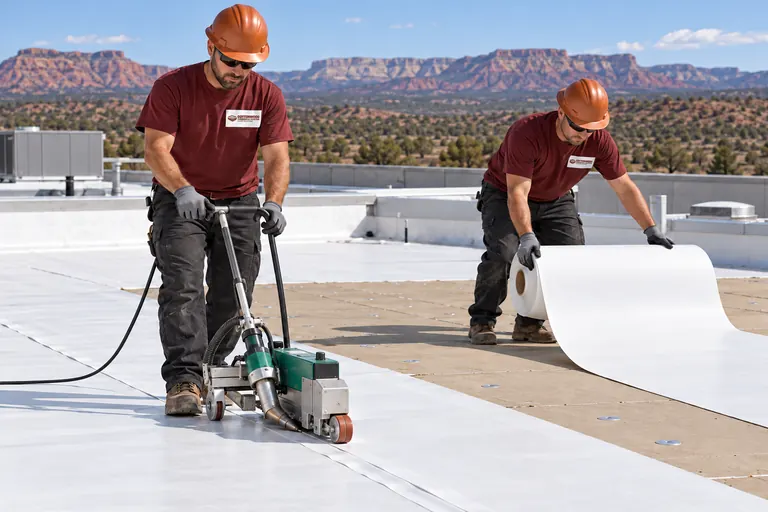
Welded TPO turns up the parapet as one piece with the field sheet, and the welds at corners and scuppers can be probed for gaps.
TPO roofing details
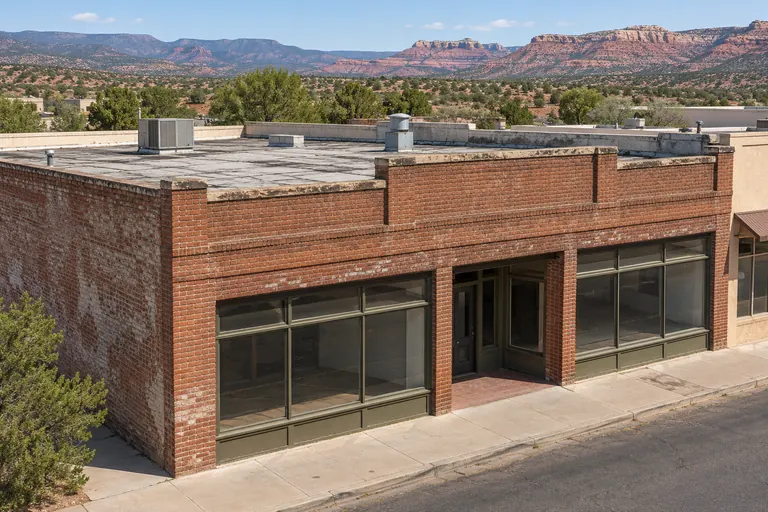
We are a commercial roofing contractor for Clarkdale buildings with flat roofs behind parapet walls, repairing coping, parapet flashing, and scuppers, and installing TPO and EPDM roofs.
 Parapet Roof Building
 Coping Install
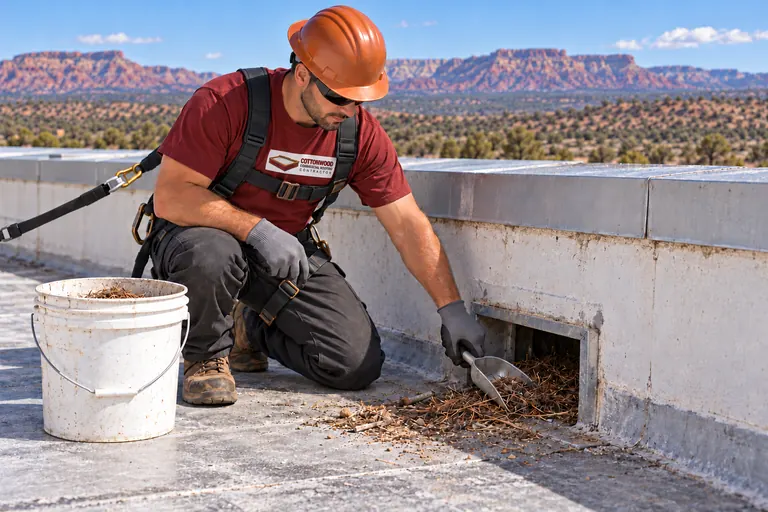 Scupper Clearing
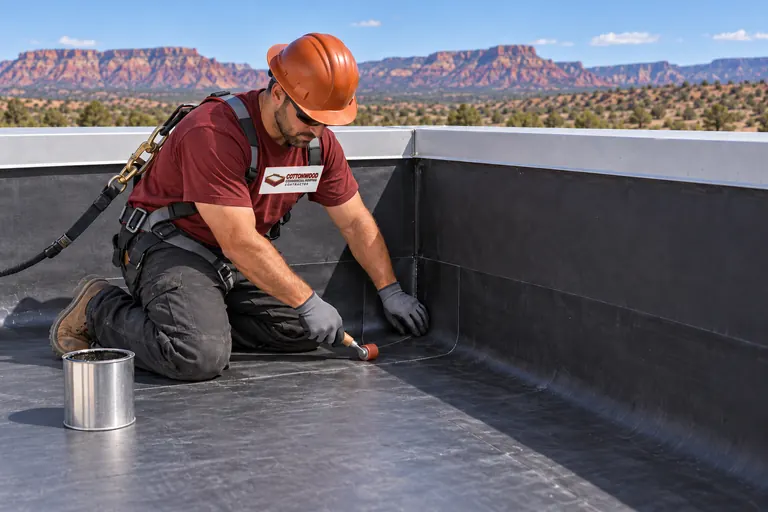
A flat roof boxed in by parapet walls can only drain where someone cut an opening. When a scupper clogs or the parapet flashing lets go, water has nowhere to go but down into the wall or the building.
Clarkdale's Building Division requires a permit for roofing work of any size, so even a parapet rebuild goes on file before work starts.
Most flat-roof leaks on parapet buildings start at the wall. Here is how each one shows up and what we do.
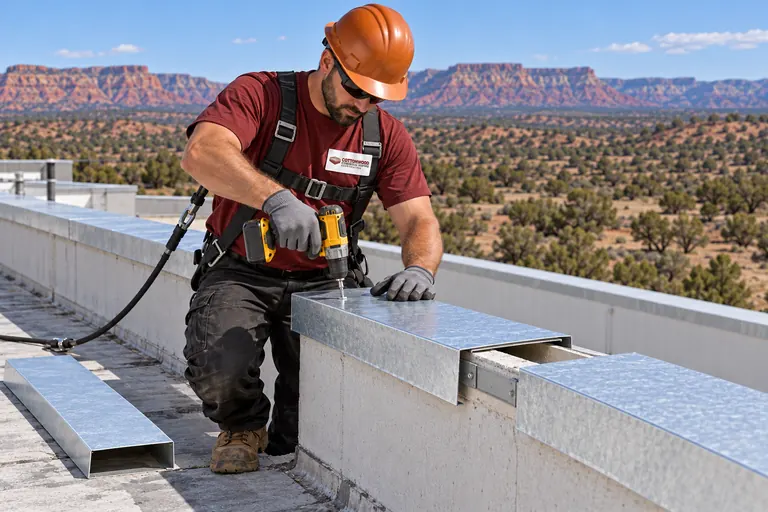
Open joints between coping caps letting rain run into the top of the parapet.
We pull the coping, reseal or replace the joint covers, and refasten the caps.
A scupper choked with leaves, juniper litter, or dust, or an opening set too high above the roof.
We clear the scupper, check its height against the low point, and add an overflow where water still backs up.
Inside corners where two parapets meet are the hardest spot to flash and the first to split.
Corners get new preformed flashing welded or taped into the field membrane.
Base flashing that has shrunk or lost adhesion opens a gap where the roof turns up the parapet.
We strip the failed base flashing, prime the wall, and install new flashing with a termination bar.
Water inside the wall freezes on winter nights and pushes the finish apart.
We stop the water at the coping and flashing first, then hand masonry or stucco repair to the right trade.
Parapet leaks spread inside walls before they show on a ceiling. Catching them early keeps the repair up on the roof.
Before The Work
After The Work
TPO and EPDM both handle flat roofs boxed in by parapets. The difference shows at the wall details.
Welded TPO turns up the parapet as one piece with the field sheet, and the welds at corners and scuppers can be probed for gaps.
TPO roofing details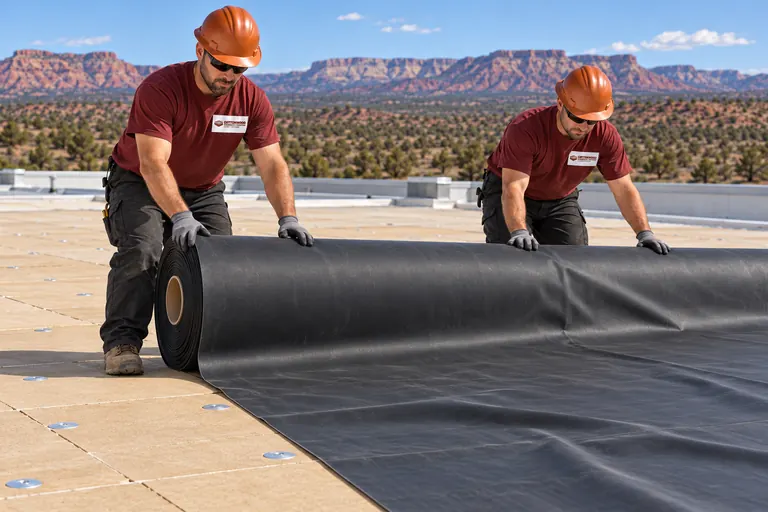
Rubber sheets bend into tight parapet corners and stay pliable through freezing nights, with taped seams and cover strips at every turn.
EPDM roofing detailsCall and tell us which wall it collects against. A blocked scupper is the usual cause, and clearing it is often the first repair.
Call UsInspection comes first, the town permit follows, and parapet details get fixed before the field of the roof.
Every parapet gets walked, coping joints are checked by hand, and moisture readings run along the edge where water tends to enter first.
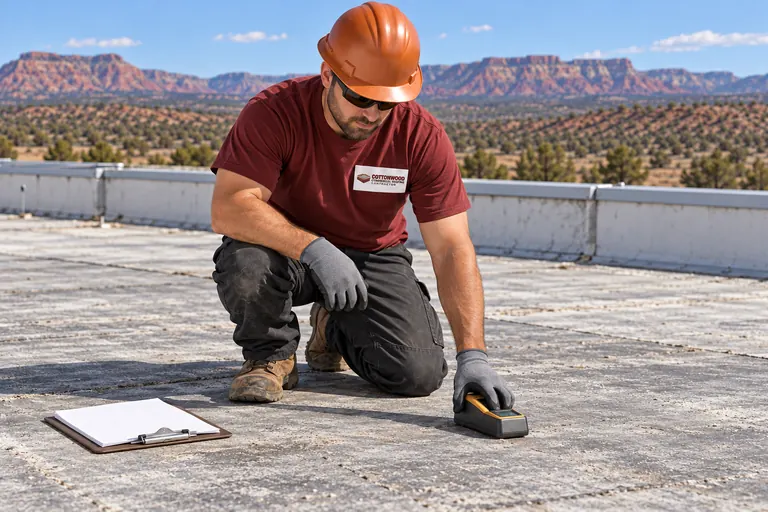
Each coping joint, scupper, and corner is marked on a roof plan, so the repair list shows exactly which openings let water in.
Clarkdale requires a permit for roofing work, so the application goes to the Building Division with the scope before materials arrive.
Old base flashing is stripped, wet edge insulation replaced, and new flashing run up the parapet under a termination bar and reset coping.
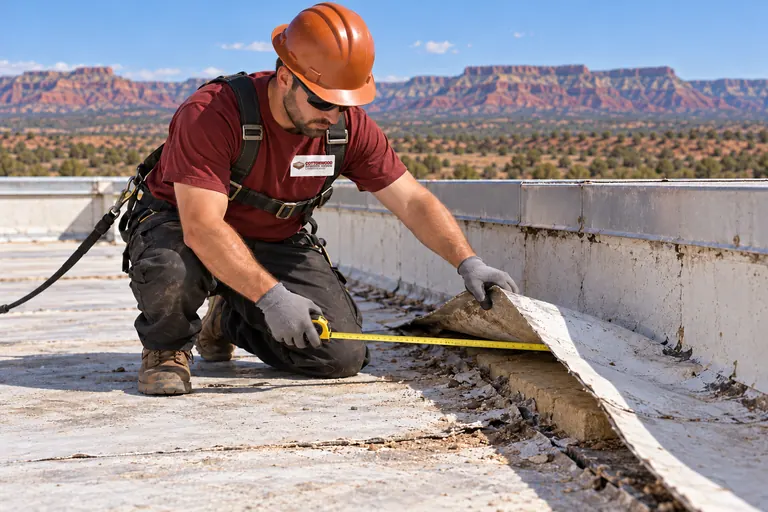
Scuppers are reflashed, corners wrapped, and every roof opening is checked with you on a final walk before the job closes out.
Each neighbor has its own permit office and its own common roof problem.
Up the hill, Jerome sends roofing and paint changes through its Design Review Board before material is ordered.
Next door, Cottonwood roof permits run through the City of Cottonwood Community Development office.
Across Cottonwood to the southeast, Verde Village shared retail roofs can carry a leak several suites from where it entered.
Farther up SR 89A, Sedona caps roof reflectance by building size and bans white roofs.
Answers about parapet roofs, scuppers, and permits for Clarkdale commercial buildings.
Yes. The Town of Clarkdale Building Division states that roofing work needs a permit, whatever its size. We include the permit filing in the roof scope so coping, flashing, and membrane work can start once it is issued. Tell us early if the leak is urgent.
At the edges. Coping joints, base flashing where the membrane turns up the wall, inside corners, and scupper openings all have seams or terminations that age faster than the flat field. Most parapet leak repairs happen within a few feet of the wall.
Water that stands against the wall for hours after a storm is the clearest sign. We measure the opening, compare it with the roof area it drains, and check whether it sits above the low point. An undersized or high scupper gets resized or paired with an overflow.
Loose or leaking coping can often be refastened with new joint covers and sealant. Caps that are bent, rusted through, or too short to cover the wall top get replaced, and the parapet top gets new underlayment before they go back on.
Trapped water is the usual cause. Rain gets in through open coping or failed flashing, then freezes on winter nights and pushes the finish apart. Fixing the roof side first stops the cracking from returning after the masonry or stucco repair.
Either works well. TPO welds into one piece up the parapet face and at corners, and the welds can be probed. EPDM bends easily into tight corners and stays pliable in cold weather. The choice often comes down to how many corners and penetrations the roof has.
Usually. Parapet and edge work happens at the outside of the roof, away from the rooms below. Material lifts are placed away from entrances, and any opened edge is sealed before work stops for the evening. Noisy coping removal can be scheduled for early or late hours.
Tell us which walls show stains or standing water, and the roof walk starts at those parapets.
Want A Call Back About Your Roof?
Leave a name and number and we will call to talk through the roof.
Or call now: (928) 436-4826