Understand The Material Differences
Single-ply roofing includes materials such as TPO, PVC and EPDM. They have different properties and connection methods. A suitable choice depends on the application and complete system requirements rather than treating all sheet membranes as interchangeable.
The membrane works with insulation, substrate, attachment and flashing. Those components need to be considered together. A specification limited to the top sheet leaves important parts of the roof undefined.
Assess Existing Conditions
For work on an existing building, determine which layers can remain and whether moisture or deterioration requires removal. The condition of the substrate affects the new system, even if the finished membrane will conceal it.
Transitions to adjacent roofs also matter. A new section may meet a different material or older assembly. The connection must be planned for the actual conditions rather than assumed from a standard field detail.
Include The Roof Features
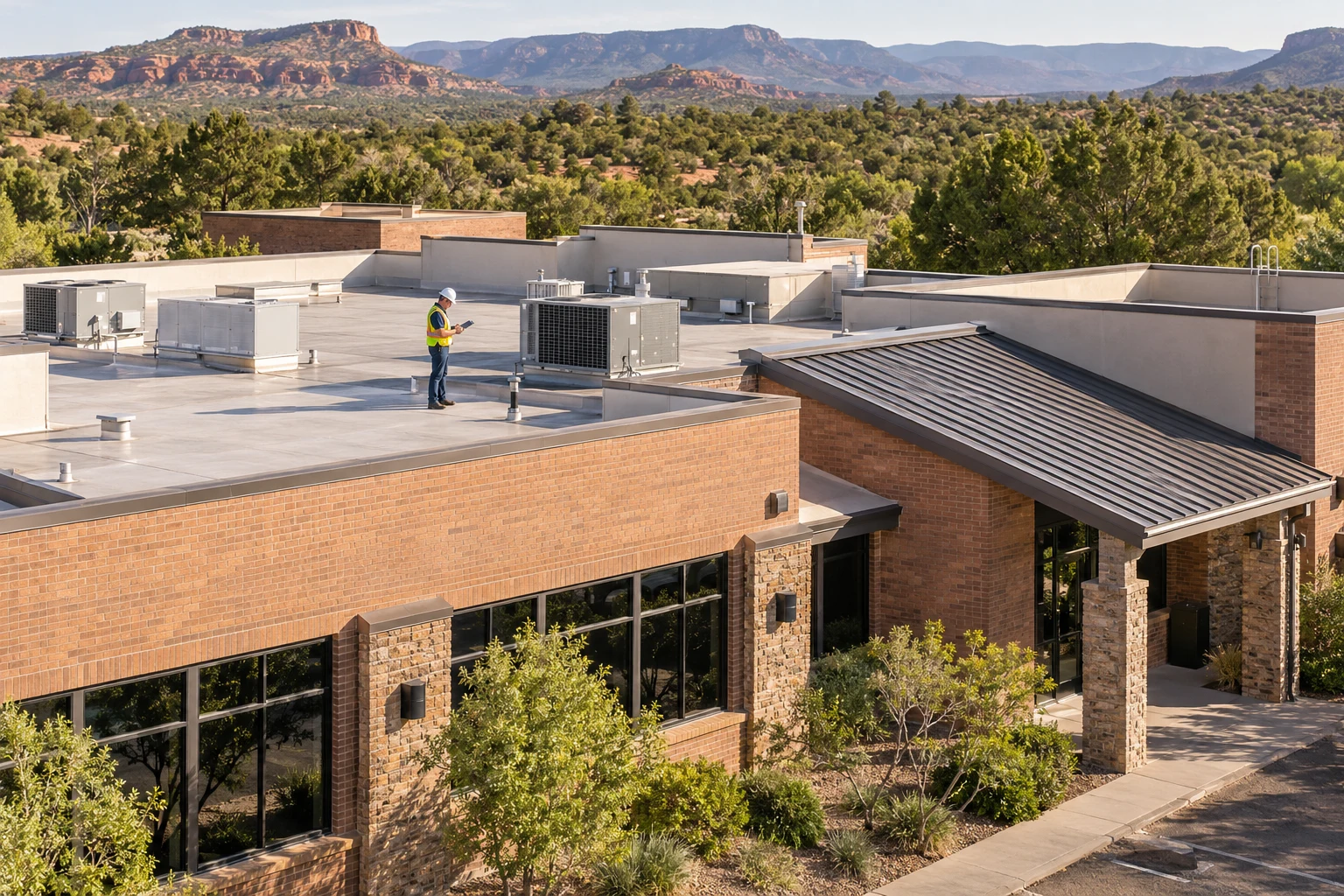
Pipes, curbs, walls and drains interrupt the open membrane surface. Their flashing and connections are essential parts of the system. An estimate should account for these details and the preparation they require.
Regular equipment access can also affect the roof after installation. Identify service routes and areas needing protection so the proposal addresses the building's ongoing use.
Request A System-Specific Discussion
Provide the address, known existing material and the reason for the project. We can discuss the assessment needed to establish preparation, insulation, attachment and details. The resulting scope should explain why the proposed assembly fits the property.